Interview with Quaker theologian Ben Wood on Quaker studies, liberal politics, dual membership of Quakers and Druids, interfaith humility, prayer, and grace as a basis for hope and social action.

Lived Religion: Ben Wood
read more

Interview with Quaker theologian Ben Wood on Quaker studies, liberal politics, dual membership of Quakers and Druids, interfaith humility, prayer, and grace as a basis for hope and social action.

Christiane van Duuren describes volunteering at the Tent of Nations, a Palestinian farm near Bethlehem under settler pressure, and the Nassar family’s nonviolent, active hope despite court obstruction and occupation.

Ernst Bloch’s philosophy of hope: he reads the Bible politically, treats atheism as the precondition of messianic hope, and values religion as a source of ‘concrete utopia’. Contrasted with Moltmann’s theology of hope.

Žižek’s reading of Melville’s Bartleby (‘I would prefer not to’) as resistance that steps outside the system rather than opposing it. The author applies this to Jesus, the Kingdom of God and a church captured by neoliberal methods.
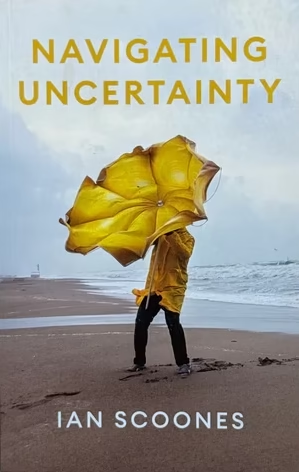
Review of Ian Scoones, Navigating Uncertainty (2024). Scoones argues that small farmers and traders in Africa and Asia cope with uncertainty better than top-down planners, and the reviewer finds the case studies strong but the closing generalisations vague.

Dominic Kirkham reviews Tom Wright and Michael Bird’s Jesus and the Powers. He finds it apologetic, and contrasts its Christendom-friendly history with a non-violent, Crossan-style Jesus movement.

John Billings reflects on faith, trust and trans lives. He draws on Jewish and Christian traditions, criticises UK institutions and media treatment of trans people, and calls for compassion over panic.

Interview with Simon Cross, chair of the Progressive Christianity Network, on moving from evangelical faith to a processual, political reading of Jesus, shaped by bereavement, meditation and communities of resistance.

David Chapman interviews Fidele Mutwarasibo, a Rwandan genocide survivor, on hope without bitterness, the Ubuntu worldview of ‘I am because we are’, Western individualism, migration, and protest versus persuasion.

Syed Mustafa Ali argues that appeals to nonviolence can work as a form of white supremacy, and that counterviolence, as in Palestinian armed struggle, may be necessary to end oppression, drawing on Fanon, Malcolm X and Shoatz.