
Ben Wood, Programme Coordinator for Applied Theology and Biblical Studies at The Woodbrooke Quaker Study Centre
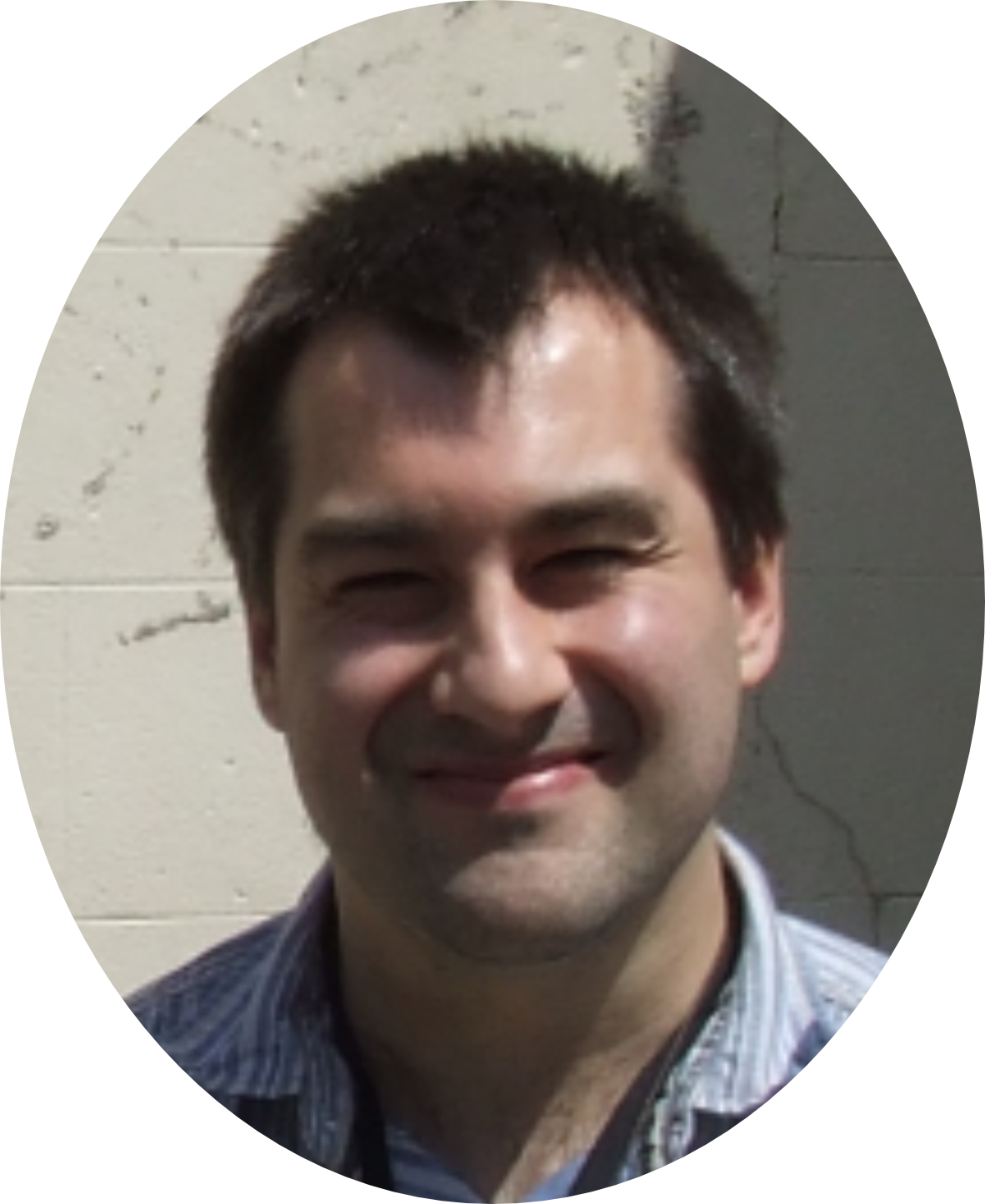
Q. Hi Ben. You have published articles and books on Quaker studies and ethics, most recently The Living Fountain: Remembrances of Quaker Christianity. Can I ask what led you into the world of Quaker studies?
This sounds a little grand, but most of my overtly Quaker academic writing has, in one way or another, emerged from a version of Anselm’s formula: ‘faith seeking understanding’. In all that I’ve written, I’ve wanted to understand what the Quaker Way of waiting, seeing, and listening means, both personally and corporately. I’ve wanted to know how Quaker words, stories, and disciplines can resource a deeper understanding of prayer, relationships, and citizenship. One of the key driving forces behind these endeavours has been a desire to make the Religious Society of Friends comprehensible to me, and hopefully to others
Q. Your first book, based on your PhD, explored scepticism and liberalism in Augustine and Montaigne, challenging both anti-liberal readings of Augustine and fatalistic neoliberalism today. In brief, why was this subject matter of personal interest?
I began the doctoral project as the neoconservative Bush presidency ended and the Obama administration began. The global financial crisis was in full swing, with deflation and collapsing banks across Europe and the United States. In the back of my mind was a profound sense of unease. Many of the foundational norms of postwar liberal democracy had been badly damaged by the U.S. government’s actions after 2001. The ‘War on Terror’, secret renditions, and torture at Abu Ghraib all suggested a profound moral malaise at the heart of the American state. The language of ‘liberal democracy’ was being used to justify rule-breaking, invasion, and the domestic surveillance of political opponents.
What I found so depressing about this period was that a great number of public theologians (many of whom I profoundly respect) had decided that Liberal Democracy was a lost cause. Instead of coming to the defence of hard-won liberal norms such as tolerance, individual rights, freedom of conscience, and deliberative politics, some great minds had embraced a position of conscientious despair. Liberalism, they claimed, was atomistic, immoral, nihilistic and materialistic. Christians needed to disentangle themselves from this ideological nightmare and set about building a countercultural Church. I refused to accept this interpretation. I felt (and continue to feel) that Public Theology should be defending the best of liberal politics while being brave enough to challenge its excesses. I chose Augustine because of his vital role in so many latter-day anti-liberal theological projects. If I could show the liberal potentialities of Augustine, I thought, I would demonstrate the deep imaginative inadequacies of so many anti-liberal theological postures. I hope I succeeded.
Q. You have described yourself as a ‘Quaker, theologian, teacher, Hedge Druid. Woodbrooke Programme Coordinator’, and in The Living Fountain state that,
Sitting on my bookshelf alongside Quaker Faith and Practice, one can find modern Druid, eco-theological and Wiccan authors.
Yet, you say that are a ‘liberal Quaker … who refuses to jettison the depths of Christian imagination in the name of some bland generic “spirituality”’. Could you unpack how you integrate or navigate different religious traditions and identities as a Quaker, educator, and theologian?
One of the undoubted pleasures of living in a society suffused with liberal politics is the recognition that no single description of a person can ever be wholly exhaustive. We all ‘contain multitudes’. My own nod to this inner diversity is my dual membership of the Religious Society of Friends and the neo-Druid organisation The Order of Bards, Ovates, and Druids. I find so much joyful complementarity between Druidry’s unabashed reverence for an ordinary, all-suffusing sacred (in the landscape, in rivers, trees, and hills) and the Quaker tradition’s insistence that every day is holy.
You asked about navigating different religious traditions. My theological appreciation for others’ spiritual journeys stems primarily from my Quaker faith. From our earliest beginnings, Friends have affirmed that the Light which appeared in Jesus of Nazareth two millennia ago was already redeeming the cosmos long before the Infinite Light crystallised so magnificently in a human being. As Justin Martyr famously put it: ‘[Christ] is the Word of whom every race of men [are] partakers’. It seems to me that part of my job as a Quaker teacher is to seek out God’s truth, regardless of who said it, where it was said, or how long ago it was discovered.
Unlike Justin’s confident mode of apologetics, however, I think Christians need to show humility. In seeking the presence of Christ in others, we should sit carefully with the differences between traditions and communities, rather than attempting to flatten them into a mushy and disrespectful universalism. When a Buddhist or a Muslim talks with us about their transcendental hopes, we need to listen to what they’re actually saying, rather than simply assuming from the off that ‘everyone is saying the same thing really’. Being a theologian in intercultural/interfaith conversation is always about cherishing the truths of one’s own tradition, without seeking to absorb, colonise, or seize the lives or stories of others. So much of my teaching at Woodbrooke over the last year has been about creating space for such rich and tender dialogue.
Q. How does your approach to religion today inform your day-to-day life — spiritual practices and priorities, family life, and interests?
I keep trying (and failing) to live every day in and through the kind of ordinary sacredness I’ve described
I think my instinctively dialogical and open approach to the spiritual search is becoming increasingly important to me as time goes on. I keep trying (and failing) to live every day in and through the kind of ordinary sacredness I’ve described. I have recently moved house with my partner, and now we have a backyard, which we’d like to transform into a little herb garden over the next couple of years. I hope this project will help keep me grounded in the sanctity of ordinary life and encourage me to see shoots of verdant goodness, even amidst painful or difficult situations. The belief that divine wisdom can be found everywhere has invited great joys into my life, but this axiom also presents an ongoing challenge. I keep asking myself: Am I moving closer to the Truth I’m trying to see in the world? What’s keeping me from acting on it? In this spirit, I’m trying to find more time for prayer, meditation and deep listening. I’m still scarred by years in a university setting that was all about output and impact (‘publish or die’). I’m doing my best to unlearn this feverish way of being and to seek greater slowness and deliberation instead. We live in a divided and wounded world, not just at the level of international affairs, but at the level of the street corner. I’m attempting to find a stable and peaceful core, not so I can escape from the world, but rather so I can see the world with greater compassion and clarity.
Q. And how does your approach to religion and religious self-understanding inform your political outlook?
The Quaker Way affirms that God’s grace is not merely something that frees us from sin and alienation at death. Grace is continually given to us, drawing us out of egotism and fatalism and encouraging us to build islands of hope and compassion on earth. God loves everyone and cherishes everything. Our chief task as Christian political animals is to work out how a commitment to a ubiquitous divine cherishing should be put into practice at the level of the community and the economy, and at the much murkier levels of international conflict, peace, and diplomacy. While I don’t think there are easy answers to any of this, it is by struggling with the painful gap between how the world is and how it should be that we come closer to the Spirit.
In this respect, Quakerism embodies a quiet utopianism, a belief that God works in real time on earth as in Heaven. I’m certain I bring these hopeful reflexes into my politics. Despite all the awfulness we see around us every day, it seems to me that the worst thing we can do is submit to cynicism or become engrossed in despair. Grace is at work, through the hospitality of friends and strangers, among those who seek social and ecological justice, in the lives of those who give something back to their local area, or in those who diffuse hopelessness in their workplace or family. Goodness is cumulative. Every act, no matter how seemingly small, widens the frontiers of Heaven.
Part of my own kind of frontier-building is captured in the odd label ‘liberal socialist’. I have a sense that if we want to genuinely serve God and our neighbour, we have to keep two principles in creative tension. We need liberty — the chance to use our gifts, to experiment, to exercise initiative, to make mistakes, and, crucially, the freedom to change our minds. You can’t inherit truth, goodness, justice or peace. If you want these things, you have to go looking for them. They won’t drop into your lap. That’s the joy and the heaviness of freedom. But liberty needs company. We can only revise our goals, name our hopes, and discern our course by living with (and beside) others. We cannot become fully formed selves without sociability. By attempting to honour both liberty and community, we can find a helpful vision for the Church on the one hand, and a viable model for messy secular politics on the other. I try to do this in my own political engagement, although I must say I wish I were far more active than I currently am. Perhaps I should start with the herb garden and work out from there!
Thank you Ben, for sharing yourself and the way you navigate Quakerism.
Notes
Ben’s book The Living Fountain considers discernment in the Quaker movement. Noting Friends’ commitment to diversity and inclusivity — in welcoming a wide range of religious views and outlooks, including liberal universalism, non-theist religious humanism, mysticism, and social activism — he explores how the movement can find collective Quaker narratives to shape its common discernment.
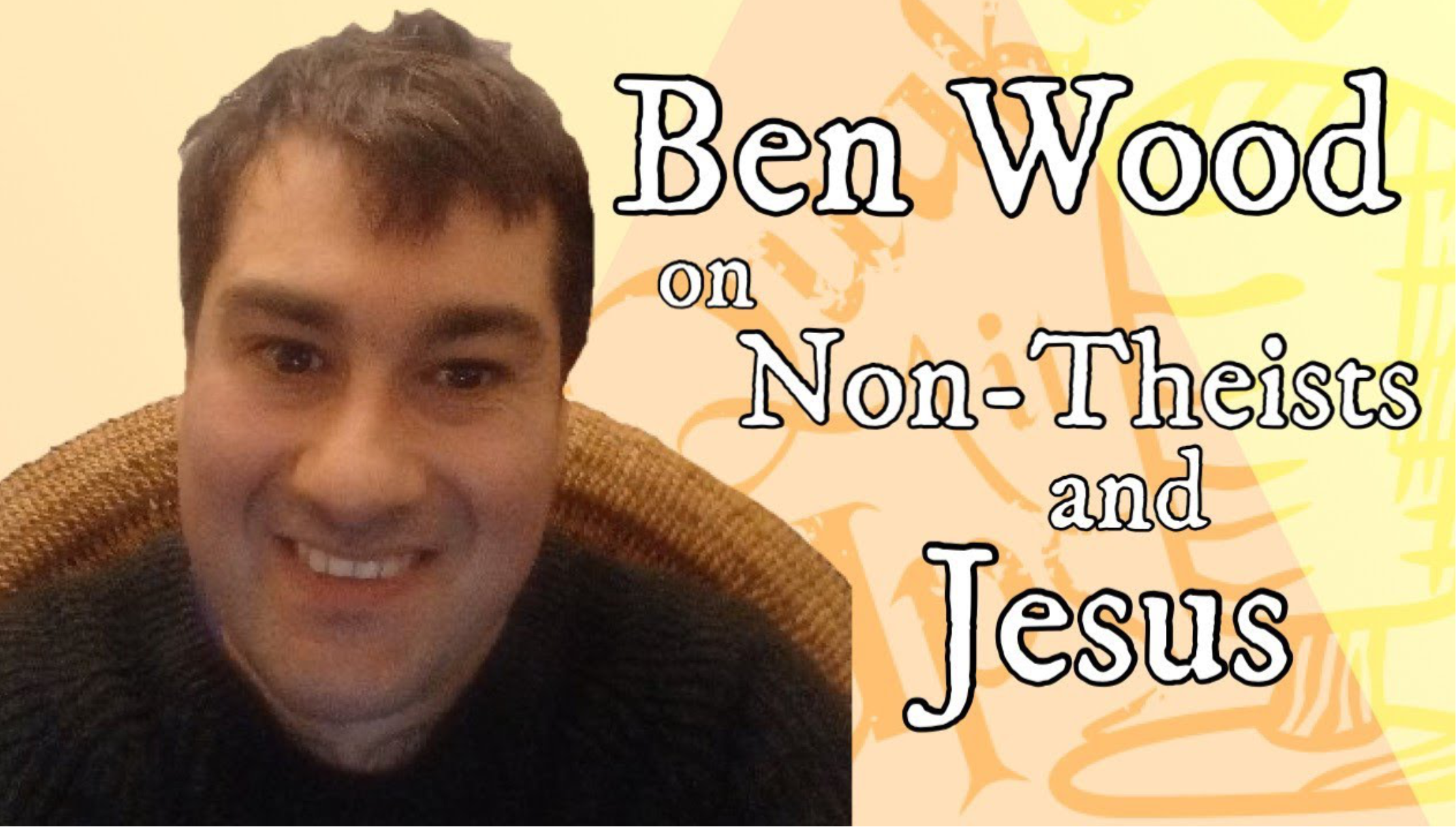
Quaker Faith and Practice (5th ed. with updates) is available online. A list of Ben’s publications is available at woodbrooke.org.uk, and he posts as @cosmichope.bsky.social on Bluesky.