
Clare Carlisle, Transcendence for Beginners: Life Writing and Philosophy (Fitzcarraldo, 2025; and New York Review of Books, 2026). pp. 184.
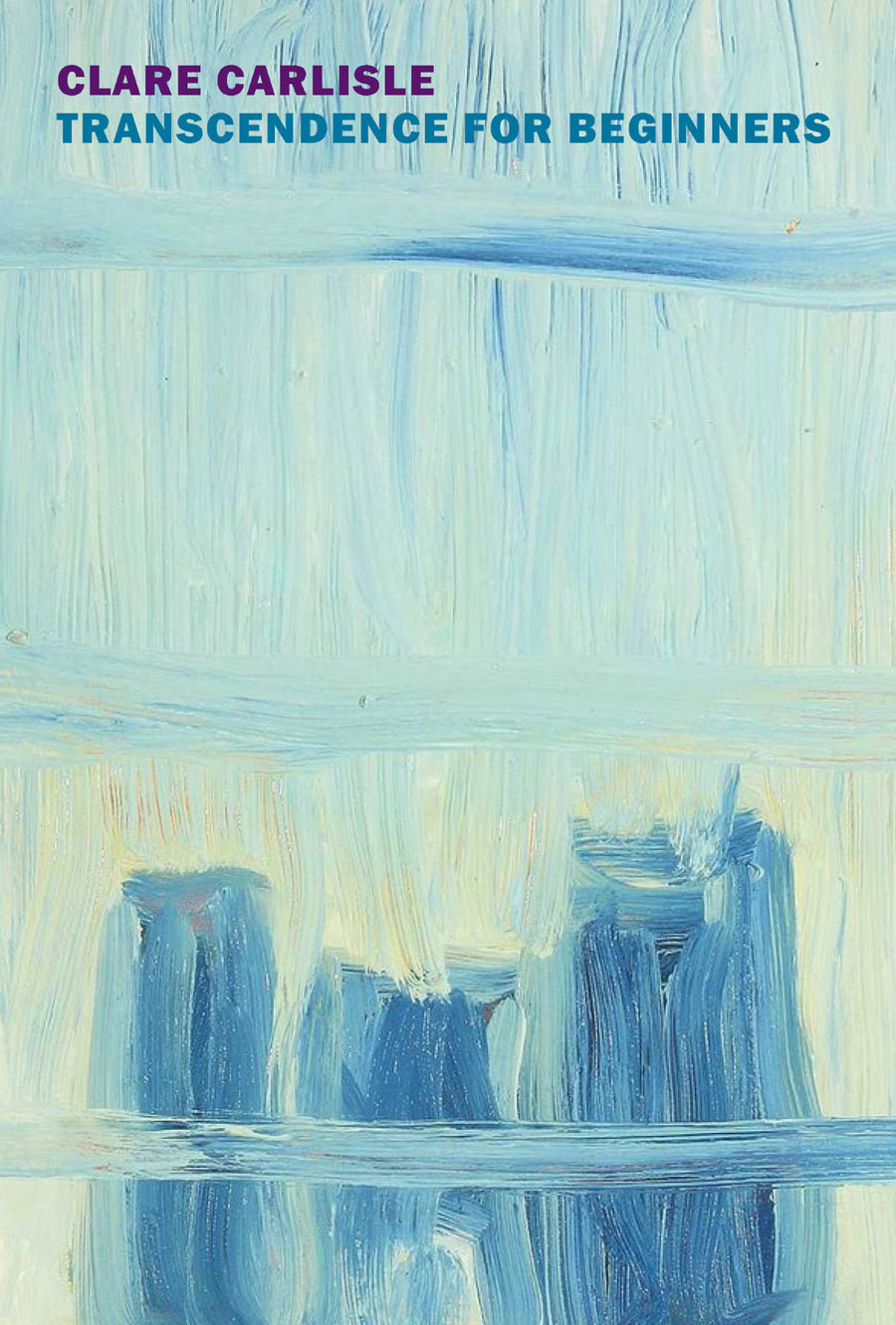
Clare Carlisle’s thought-provoking little book began life as a Gifford Lecture series delivered at the University of St Andrews in 2024. The text is not lecture-like; certainly not dry, didactic or overly academic. Carlisle’s prose is often beautiful, at turns elegant and meandering, curious, even elegiac. The author is a gentle, questing, undogmatic philosopher, but she is also a biographer, having written well-received lives of Kierkegaard, Spinoza — on his religion — and, most recently, George Eliot. The territory explored in Transcendence for Beginners, then, is that which lies between the two practices of “life writing” and philosophy, and how they may complement each other in gaining a greater understanding of what it means to be human: to be human at our best, our transcendent best.
When we attempt to examine our own lives — to discern purpose, question decisions, accommodate losses — to make sense of the muddle of our existence, it is a difficult task, as we are still very much in the process of living them. The life writer, however, is not a biographer in real time. Liberated from time, viewing the ‘drone-shot’ of an entire life, selective though this may be, one can see the life as Spinoza suggests, “under the aspect of eternity”. Carlisle engages with several familiar philosophical tropes; she climbs mountains, enters caves, sits beside shrines, and takes detours that make connections between the philosophical spirits of West and East. But she also nudges her readers towards the lives of those she sees as good, virtuous or ‘noble’, so that we may find in their ways examples of practice, attitudes of mind, and struggles towards expression that echo our own quest for what some would describe as ‘transcendence’.
Close readings of passages from George Eliot, Proust and Spinoza, together with a detailed account of the working practice of her friend, the artist Celia Paul, intersect with Carlisle’s retelling of significant elements of her own life path. She is aware, though, that transcendence is a slippery fish. Talk of transcendence can drift all too easily into the otherworldly and further back into an unhelpful metaphysics of divine reality. Carlisle was a pupil of Don Cupitt and one of the speakers at the excellent short conference held at Emmanuel College, Cambridge, in 2024, to mark the 40th anniversary of Cupitt’s Sea of Faith TV series (see Sofia 155).
Cupitt’s non-realist rejection of an objective God, and of both an ‘afterlife’ and any distinctly separate ‘inner life’, led him to rethink transcendence. He insisted that there was nowhere else to locate transcendence but in the dynamic energy of human society, in ethical action, and in the constant, creative flux of the everyday. Essentially, he made sense of transcendent experience and mystical intent by exchanging the metaphysical for the immanent.
Carlisle, too, in her winding appreciation of the good in others, in historical and fictional lives, finds transcendence in the human everyday: in the love of others, the love of nature, and in lives of repeated, devoted care and attention. Carlisle’s mouthpiece for this ‘ethic of exemplarity’ — the moral power of ordinary lives — is often George Eliot. Eliot wrote of quiet, noble Dorothea Brooke in the closing passage of Middlemarch: ‘the effect of her being on those around her was incalculably diffusive’. To a young friend, Eliot wrote: ‘human goodness is the only guarantee that there can be any sort of goodness in the universe’. Ultimately, Carlisle finds transcendence in devotion, in time given and time shared. ‘Devotion gives ethical shape and emotional colour to our expressive, exhibitive being in the world’.
Devotion is a repeated movement of return that expresses love. And when we ask, as a philosopher must, what is Love?, the answer surely lies in this concept of devotion: at once an action, a feeling, a relationship and an affirmation of value.
Clare Carlisle, Transcendence for Beginners, pp. 134–135
Andy Kemp has been involved with the Sea of Faith Network for over 30 years. He is currently Vice-Chair of its Steering Group, is a member of the Merseyside & North Wales Group, and helps organise ‘SOF In Conversation’.