Robert Boucnick reviews Nicholas Spencer’s Magisteria, a history showing the relationship of science and religion to be complex rather than a story of conflict, and correcting common myths about Galileo and others.
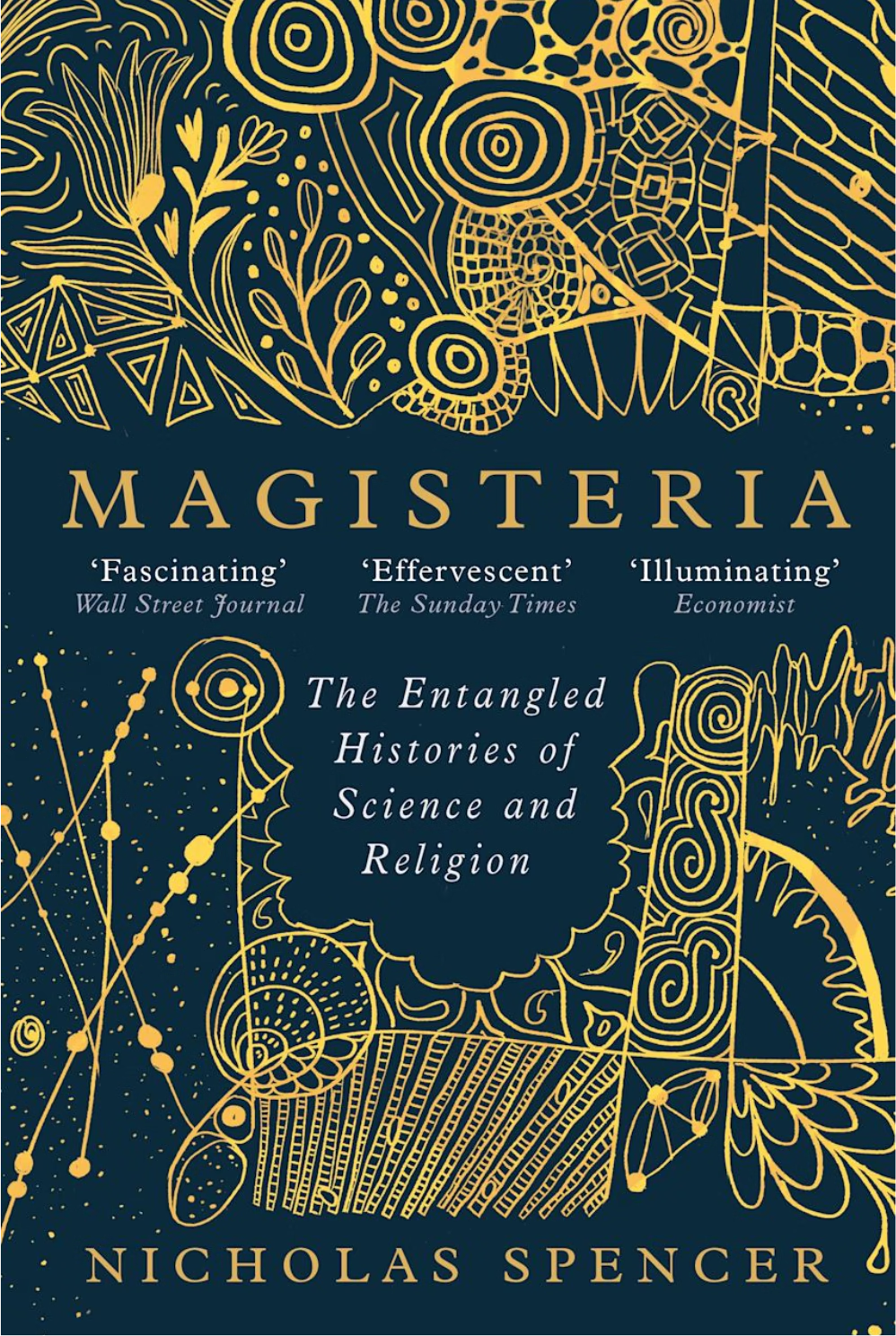

Robert Boucnick reviews Nicholas Spencer’s Magisteria, a history showing the relationship of science and religion to be complex rather than a story of conflict, and correcting common myths about Galileo and others.
A Worldviews Navigator column on the phrase ‘What I don’t understand is…’, suggesting it hides unwillingness to think through causes. It cites Cupitt on religious upheaval and the Air India ‘miracle’ survivor.

Beth Singler examines religious responses to artificial intelligence, including ‘LLM theisms’, AI-generated theology professors, and techno-optimist narratives that borrow religious ideas, and urges critical reflection in education.

Describes a Big Ideas for RE unit marking a century since the Scopes trial, which combines religious education and science lessons on evolution, creationism, interpretation of texts and worldviews for ages 11 to 14.
Compares science and religion to a landscape painting and a pen-and-ink cartoon: both are models of the world, and a cartoon should not be dismissed for failing to be a painting.
Edwin Salter’s meditation on water, flux and change, linking geology, physics, time, dance, art and Jung to the human wish for permanence and faith in heaven.

Edward Nickell reviews Jonathan Jong’s Experimenting with Religion, which uses psychology experiments on teleological thinking, souls, ritual and death anxiety to ask why people hold religious beliefs.
Extracts from Ernesto Cardenal’s Cosmic Canticle in which the universe is a harmonious music of rhythm and matter, and humans are stars and planet becoming conscious of themselves.
Robert Boucnik, after reading Don Cupitt’s Taking Leave of God, argues that science leaves unanswerable mysteries and that religion rests on awe, not morality alone. He says Cupitt argues God out of existence instead of favouring an impersonal God.
Ian Harris argues that the climate crisis requires an ‘eco-human’ spirituality. He draws on the new cosmic story, Lloyd Geering, Teilhard, Maori ideas and Karen Armstrong, and asks Christianity to include the Earth.