Katy Jennison, a Wiccan and solitary practitioner, describes her full-moon ritual: the circle, the four elements and their meanings, calling on deities understood as true but not literally factual, and magical work as personal transformation.
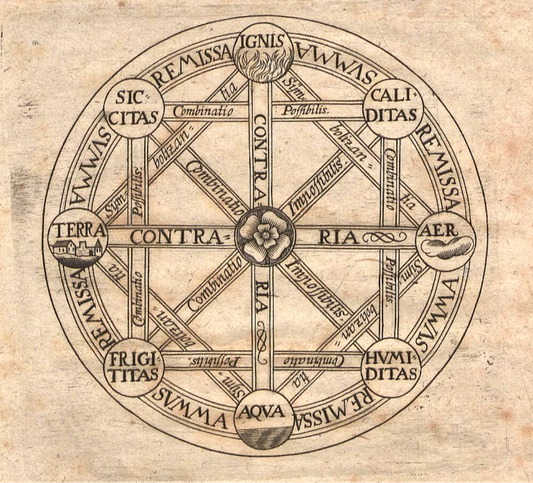

Katy Jennison, a Wiccan and solitary practitioner, describes her full-moon ritual: the circle, the four elements and their meanings, calling on deities understood as true but not literally factual, and magical work as personal transformation.

Argues that Christmas combines a secular midwinter festival, the incarnation story and the fantasy of Father Christmas, and that religious stories can be true without being literal history.
Edward Nickell reviews Victoria Johnson’s On Voice, on voices in Christian worship, women’s voices, song and silence, and compares it with his own experience of the Church of England and hymns.
A priest argues that the Church of England’s growing restrictions on baptism reflect rigid realist theology, and that a non-realist, open approach would welcome families and treat birth as worth celebrating.
Stephen Mitchell, a retired priest, discusses music and religion. Music is ubiquitous and sacred in a non-supernatural sense, and joins religion through liturgy as shared work. He also defends hymn-writing and urges more thought in using music in worship.
Katie Hainbach, Head of Music at Alyth Reform Synagogue, describes music in Reform Jewish worship: its history, styles, cantillation, work with dementia patients, children and interfaith groups.
Tony Windross traces the history of Harvest Festival and asks whom non-realists thank at it. He argues that gratitude should lead to concern for the poor, citing the gleaning laws in Leviticus.
Edward Nickell describes his path from militant atheism in Northern Ireland to the Network. He argues that religious ritual, music and tradition matter beyond literal belief, and considers church decline and the Network’s future.
Stephen Mitchell argues that the language and ritual of Christian worship, including the ‘Body of Christ’, should stay poetic and not shrink to a historical Jesus. Faith is practice within a community.
Frank Walker, a Unitarian minister aged 87, argues against the ‘no-funeral funeral’ of unaccompanied cremation, saying it denies death and that marking death with words and ceremony is a human need.