Andrew Edgar reviews Paul Kingsnorth’s Against the Machine, which blames technological modernity for destroying meaning, place and humanity, and judges it important but too conservative, hyperbolic and insensitive on transgender people.
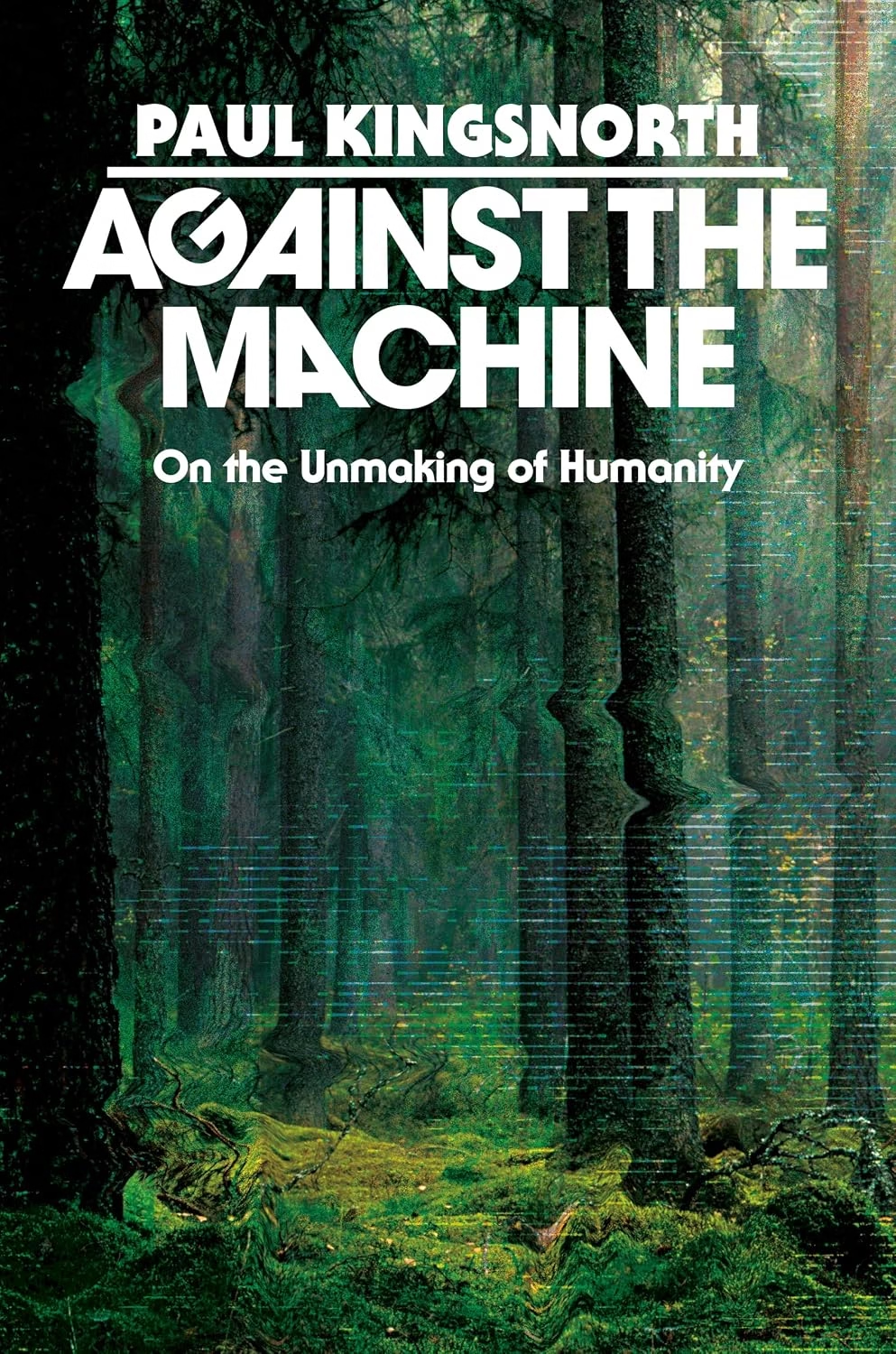

Andrew Edgar reviews Paul Kingsnorth’s Against the Machine, which blames technological modernity for destroying meaning, place and humanity, and judges it important but too conservative, hyperbolic and insensitive on transgender people.

Review of David McRaney’s How Minds Change, which describes deep canvassing and street epistemology as ways of persuading people through rapport and listening. The reviewer sees uses for them in local groups.
Review of David McRaney’s How Minds Change, on deep canvassing and street epistemology. It finds emotional insight prompts lasting changes of opinion, and urges face-to-face conversation over polarised online debate.
Review of Rowan Williams’s Passions of the Soul, on early Eastern Christian mystics and the ‘passions’ behind the seven deadly sins. The reviewer compares their advice with cognitive behavioural therapy and asks what ethic we presuppose.
A Penn’orth column examines fear as a basic emotion. It covers panic spread through stories and social media, the real dread felt by people in poverty, existential fear of extinction behind belief in an afterlife, and biblical awe.

Edward Nickell reviews Jonathan Jong’s Experimenting with Religion, which uses psychology experiments on teleological thinking, souls, ritual and death anxiety to ask why people hold religious beliefs.
Bobbie Stephens-Wright recounts her work as a Spiritualist medium and how psychoanalytic ideas on dissociation gave her a non-supernatural explanation. She describes finding Sea of Faith and her own account of mediumship.
Stephen Mitchell uses Corpus Christi and Cupitt’s idea that the self is the analogy of God to reread real presence and the Holy Spirit as presence, imagination and attention to life.
Grenville Gilbert argues there is no abstract individual: people become themselves in relationship. He criticises Thatcherite individualism and free-market economics, and calls for individuals within society and love of neighbour.
Brian Mountford argues that being human is defined by storytelling and religious yearning, then sets out a panentheist view of God as life force, drawing on quantum physics and Schleiermacher.