
Contents
Articles
- Rediscovering Fatherhood – in the Gaze of the Infant, Duncan Dormor
- Silas Marner's Pure Gold, Mary Lloyd
- God and Patriarchy, Anna Sutcliffe
- My Father's Name was Jock, Ken Smith
- Abraham, Isaac and the Prodigal Son, John Theodore Cragg
- God the Father – or Not?, Adrian B. Smith
- Of the Father's Love – Adopted, John Pearson
- John Horder reflects on the first Stevie Smith Roadshow, John Horder
- The Legend of the Green Man, Cicely Herbert
Reviews
- Stephen Mitchell reviews A Broad Place: An Autobiography, Stephen Mitchell
- Michael Morton reviews Religion and Human Fulfilment, Michael Morton
- Dominic Kirkham reviews God, Energy and the Field, Dominic Kirkham
- Anne Ashworth reviews Darwin: A Life in Poems, Anne Ashworth
Poetry
- The Broken Chain, Helen Bellamy
- To My Grandfather, William Imray
Regulars and Occasionals
- SOF Sift: A Sea of Faith Perspective, Jerry Peyton
- Current Affair: Mayday Notes, Owl

Editorial
For this issue of Sofia on fatherhood, I did not commission any articles but called for contributions from SOF Network members, saying they could be about anything to do with fatherhood, from personal reminiscences to literary or theological reflections. As you will read, I had a rich and varied response.
The only article I did specifically ask for was permission to reprint a talk about fatherhood given by Duncan Dormor, Dean of St John’s College Cambridge. He graciously gave permission and that talk has become our leading article.
It covers both some of the problems facing modern fathers and a look at the fatherhood of God in both the Old and the New Testaments. But what I found irresistible in his talk was a quotation from Martin Luther’s On the Estate of Marriage (1522) grumbling about all he has to do for his infant (but nevertheless feeling that infant to be a most wonderful gift):
Alas, must I rock the baby, wash its nappies, make its bed, smell its stench, stay up nights with it, take care of it when it cries, heal its rashes and sores… It is a delightful picture but perhaps women may be forgiven a dash of scepticism: did he really? (I recall that when my first child was born – in 1963 not 1522! – his father, my husband, would not even push the pram.) Among contributions from SOF members we have an article by our Vice-Chair Mary Lloyd on Silas Marner and Eppie his foundling daughter, two personal memoirs, one by an adopted and the other by a natural son, together with pieces about positive and negative aspects of the idea of God the Father: as creator and provider, but also as prop of patriarchy and sacrificer of his Son.
Partly in order to overcome such problems as ‘why does God not intervene to prevent natural disasters?’ Adrian B.
Smith says in his article that the image of God the Father needs to be superseded by a ‘panentheist’ God, a divine all-pervading Energy. He thinks this ‘Ultimate Reality’ or ‘Godhead beyond God’ is real, whereas images like that of God as Father are human creations. Sofia Editor thinks both ‘God the Father’ and ‘Godhead beyond God’ are human creations. But we did not create the energy that moves the universe and gives us our life. Just as human fathers can be good or bad, Cosmic Energy can manifest itself both as ‘eternal delight’ and as ‘an eternal fierce destruction’: but why should we call it God? ‘God the Energy’ is just as problematic as ‘God the Father’ and both are poetic images.
However, I do think the metaphor created by the human poetic genius of a Father God is still powerful in two ways.
Firstly as ‘Sky Father’. This is a way of acknowledging that I did not create the Cosmos. It existed long before me and after a long process of evolution, I came into being as one of the transient living beings that this Cosmos has produced.
Secondly, our Father can stand for ‘the fathers that begat us’: our cultural ancestors. As Lloyd Geering puts it in his essay ‘Saving the Planet’ (Time and Tide, SOF 2001):
In learning to value the totality of human culture and spirituality, we also come to realise how dependent we are on our own cultural inheritance. In the past, our spiritual forebears felt themselves to be dependent on the will and activity of God, the supreme supernatural being. For us that feeling of dependence on God has been replaced by a feeling of dependence on the countless generations before us who helped to create the culture we inherited.
What our forebears once attributed to the creativity of the divine heavenly creator, we must now attribute to our cultural ancestors and with a similar degree of gratitude.
We receive our life from our parents and ultimately from the energy of the Cosmos; we inherit our culture from our ancestors. We can be grateful to the Cosmos and our cultural forbears for what we have received, with what could be called filial gratitude. In our lifetime we may hope to pass on the life we have received to children or contribute to the culture we have inherited.
But the ‘God the Father’ metaphor is apt only up to a point. Or rather, fatherhood itself has light and dark sides.
Jesus portrays God as a caring Father, who cares for every hair on our heads:
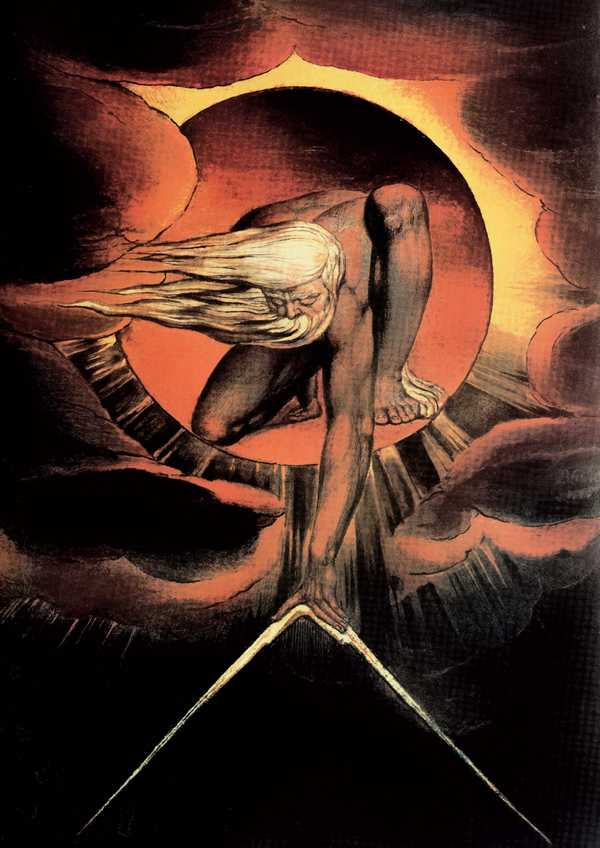
Are not two sparrows sold for a penny? Yet not one of them will fall to the ground apart from the will of your Father. And even the very hairs of your head are all counted. So don’t be afraid; you are worth more than many sparrows. (Mt 10:29) What man of you if his son asks him for bread will give him a stone? Or if he asks for a fish, will give him a serpent? If you then, who are evil, know how to give good gifts to your children, how much more will your Father who is in heaven give good things to those who ask him? (Mt 7: 9) Jesus is clearly wrong about what often happens. There are many people in the world without bread, who pray and beg for it and still starve. Others suffer terrible pain, which is not relieved, however hard they pray. Sometimes it seems appropriate to picture God as a caring Father, but sometimes he seems more like an absent or cruel father. Human fathers can be all these things: loving, caring, providing, absent, indifferent, abusive; fathers are much more likely to abandon, harm or kill their children than mothers. The Cosmos originates life and contains everything that is needed to sustain human life in general, but the Cosmos doesn’t care. editorial What does it mean to be a father and why is God called Father?
And then we have the Agony in the Garden. Jesus prays: ‘Father, if you are willing, take away this cup from me; nevertheless, not my will, but yours be done’ (Lk 22:42).
Jesus believes his Father wants him to go through horrible pain and death, and accepts his Father’s will. ‘And his sweat became like great drops of blood falling down upon the ground’ (v. 44). What kind of a father wants that, does that to his child? Certainly not a very good father in our eyes. When a father kills his children we think of that act as monstrous.
I have also often wondered about the Father in the Pauline drama of the Cosmic Christ. For example he writes to the Corinthians (I:15:24):
Then the end will come, when Christ hands over the kingdom to God the Father after he has destroyed all dominion, authority and power…For he ‘has put everything under his feet.’ Now when it says that ‘everything’ has been put under him, it is clear that this does not include God himself, who put everything under Christ. When he has done this, then the Son himself will be made subject to him who put everything under him, so that God may be all in all.
That is not what sons usually do. They usually grow up and supersede their fathers. A son who always remains subject to his father is not an adult. I have eventually come to the conclusion that the answer lies in another Pauline concept: that of Christ’s body, a whole humanity as ‘the fullness of Christ’. Then the finale of his great sweeping cosmic drama would be Christ the Son as humanity’s ‘namesake hero’ taking over from his Father. An adult humanity cannot remain subject to its father; we have to take our own decisions and not rely on God to help us out. God in that sense is dead. As Thomas Hardy wrote in his poem ‘God’s Funeral’ almost exactly a hundred years ago:
O man-projected Figure, of late Imaged as we, thy knell who shall survive?
Whence came it we were tempted to create One whom we can no longer keep alive? … And, tricked by our own early dream And need of solace, we grew self-deceived, Our making soon our maker did we deem, And what we had imagined we believed.
Nevertheless, not just at its birth but day by day until its end, life continues to be something we receive. If we keep ‘God the Father’ as a metaphor for the Cosmos which generates and sustains us, and for our cultural heritage from previous generations, it is a metaphor that applies in quite a complex way, bringing out positive and negative aspects of fatherhood, as are found in human fathers.
Returning to human fathers, at the beginning of this editorial I mentioned one who in the 1960s would not even push the pram. In contrast to that, I am deeply impressed by what I see of many young fathers today, who often share in the hard work of childcare that Luther grumbles about so ruefully. Recently, in freak April brilliant sunshine we had a family picnic on Hampstead Heath. I conclude with the image of my son-in-law helping his two sons, aged four and two, to start climbing a big tree. Then when another family member came over to be with the little ones on the low branch, he climbed on up nearly to the top. He looked much like a boy himself and all three climbers seemed to enjoy themselves hugely.
Dear Editor Amongst the longer and customarily ‘deep’ articles in Sofia 91 was the brief piece by Michael Senior on the Thokoloshe. I have yet to recover from my joy at what I took to be a fine send-up of organised religion represented by Life of Brian back in the 70s. Similarly, Michael’s article came as timely light relief at the end of a heavy though rewarding read.
I had meant, in any case, to respond to Christine Avery’s attack on Penny Mawdsley’s article (Sofia 90).
Personally, I found the latter honest, fair and measured and from my point of view totally true. For me, Michael has said it all again, and in about 2000 less words. I would keep all Penny’s lists however. And what a splendid little fellow the Thokoloshe looks. Luckily perhaps, both those with ‘unhealthy sexual fantasies’ and the more sensitive (Christine perhaps?) were spared sight of his ‘most notable feature’ Clever photography or just another Myth ?
— John Pearson
Dear Editor I endorse the exhortation of the advertisement on p. 18 of Sofia 91: ‘Join SOF Network to . . . discard the supernatural.’ If the Network has discarded the supernatural, why does it waste precious space for David Grumett’s article about Pierre Teilhard de Chardin? De Chardin goes along with Paul in deifying Jesus of Nazareth, whom Grumett invariably calls Christ; and Grumett writes, ‘Teilhard saw Christ as exercising. . . influence over the cosmos most powerfully via the mechanism of evolution.’ This may be helpful to believers who may be tempted to reject evolution, but it is no help to anyone who has discarded the supernatural. Grumett’s article would be appropriate for the US journal Sojourners or a British equivalent, but it is no help to non-theists. Could theistic articles in Sofia be turning off subscribers?
Hershey Julien 413 James Road, Palo Alto, California, USA Call Me Bwana Dear Editor One of your questions in the latest Portholes [in the call for submissions to Sofia about fatherhood] is: ‘Why are some clergymen called “Father”? I think I can answer that. For a long time, the distinction was made in the Catholic Church between the secular clergy (the parish priests, like me) and the regular clergy – those who followed a rule of life (like Jesuits and Friars).
— Hershey Julien, Palo Alto, California, USA
The seculars were called RD (Reverendus Dominus or Reverend Mister in English, Don Michele etc in Europe) and the regulars ‘Reverendus Pater’ or RP.
This distinction still exists in Italy and France although it is fading a bit.
In the 1890s Cardinal Vaughan, the then Archbishop of Westminster, wanted to distinguish his men from the Church of England clergy whose holy orders had recently been declared null and void by Leo XIII, so he instructed them to style themselves RP (Pater) not Rev.
Dominus. In this diocese, Bishop Allen therefore stopped writing to his clergy ‘Reverend Sir’ and started to write ‘Reverend Father’ instead. Some resisted; in recusant parts of Yorkshire the bluff, no-nonsense Catholic priest would still be expected to be called ‘Mr Pickwick’ well into the 20th century, but the change happened.
And anyway, many of the priests in those days were actually regulars (Redemptorists, Jesuits, Passionists etc.). However, some high Anglicans liked the name and started calling themselves ‘Father’ too – and irritatingly writing it out in full instead of ‘Fr’ (like you don’t say Missis Livingstone but Mrs). So they ruined Cardinal Vaughan’s purpose after all. But that’s the reason.
— Michael Morton, Sandbach Cheshire