
When I first met Ronald Pearse, I was very envious of his drainpipes. Not his trousers, I hasten to add – I cannot imagine Ronald ever wearing tight trousers – but his Rectory downpipes. High up, embossed on the lead hoppers were Emmanuel College crests. I too had a Cambridge living; I too had a Cambridge living; Ronald had one overseen by its Dean, none other than Don Cupitt himself.
This was in 1985, and I’d been invited to Thurcaston by Graham Spencer, a fellow priest in Leicester and former police officer. The small group had been meeting to discuss issues raised by Don Cupitt’s Taking Leave of God and the more recently broadcast series The Sea of Faith. The group was well established; each member had written separately to Don, been put in touch with each other, and paid him a visit together the previous year.
Joining this small group was by agreed invitation only, and it was necessary to establish one’s credentials. Hoping to make Ronald a little jealous, I recounted how I’d met Don back in 1972 as a PGCE student at Emmanuel. He had just published Crisis of Moral Authority. A few years later, when I was accepted for the ministry, I determined to return to Cambridge to be taught by Don, having been so impressed by his preaching and writing.
Ronald was not so easily impressed, and I learnt very quickly that he was as exacting in his thinking as he was meticulous in his note-taking. Indeed, without his minutes, I couldn’t even have given a date for this meeting. Over the next two or three years, the group grew, meeting in houses, pubs, and vicarages. Without Ronald’s enthusiasm and tenacity, there simply wouldn’t be a Sea of Faith network, for it was out of this group and their discussions—and Ronald’s persistence with Don—that the idea of holding a gathering emerged. I’ve often heard talk of a ‘Loughborough Mafia’ and a ‘Leicestershire Trinity,’ but it never felt like that to me. That first little group was a mix of men and women, clergy and lay, who were keen to see the church accept more radical thought.
The first conference at Loughborough University changed everything. Here were people from other denominations, other faiths even. Some had given up on the church, and some had never had any connection with any religion whatsoever. Again, thanks to Ronald, I am able to read through the list of attendees (though not all, as Ronald was careful to ensure that those who wanted their attendance to be kept private were not added to the list).
What an extraordinary, diverse, and talented group they were. I mention some (and forgive me for those I don’t) who I remember as playing a significant role in shaping the formation of Sea of Faith: Anne Ashworth, Joanna Clark, Christine Dyer, Paul Green, Paul Harrison, John Hodgkinson, Penny Mawdsley, Margaret Morris, David Paterson, Clive Richards, Graham Shaw, Mark Stubbs, Margie Tolstoy, Aileen La Tourette, Frank Walker, Tony Windross. Many of these are still very active in Sea of Faith, and there were others at that first conference.
One of those, who rarely gets mentioned, is Clive Richards, the Peter Mandelson of the new network. He was a politics and economics graduate who, having been the manager of a large cinema in Birmingham, became, as he often described himself, a house ‘husband.’ His partner worked for Galileo, the early computerized flight booking system. With her knowledge and expertise—and able to afford the best desktop publishing system available—he put forward the idea and produced the first magazine in 1990.
Clive was also a student at the Loughborough School of Religious Studies, founded by the chaplain David Hart. I discovered he had a large collection of liberal theology books from the 1960s and 70s. Although he had never had any involvement with a church, even as a child, he was fascinated by what he saw as a revival and continuation of that thinking. I was supposed to be his teacher of the Philosophy of Religion, but over many glasses of whiskey and late nights arguing and discussing at the vicarage, he shaped much of my thinking about the issues and the emerging movement. He analysed the first conference reaction sheets, argued strongly for the formation of a network rather than an association, movement, or organisation, and led with me one of the first conference workshops on our reaction to religious vocabulary. To the shock of many on the early conference organising group, he presented a paper entitled Charting a Course for SOF after Summer 1990.
He was keen that we didn’t just drift into organizing annual conferences. He put forward an option whereby the conference organizing sub-committee resigned en bloc and proposed the setting up of a SOFNET Steering Committee. The tasks for this committee were to include:
- Maintain records of SOFNET and deal with new members and inquiries. Develop some introductory material for the latter.
- Produce the SOFNET Newsletter where appropriate.
- Primary project to replace sketchy and anecdotal understanding of NET members with hard info through a detailed survey—find out who we’ve got, what they want, and, most importantly, what members have to contribute—need to make ordinary members feel involved.
- Advise and assist where possible any new local groups.
When Clive stood down, David Boulton not only brought his creative flair, passion, and editorial talent from producing World in Action to the magazine but also his long experience of making groups work, drafting the first constitution, and writing that introductory material in A Reasonable Faith.
But there was no one more ideally suited to keeping records and being the point of contact for enquirers than Ronald. He made a point of knowing all the members, corresponded at length with many of them, and offered support for those who found themselves in a difficult position within their church. The Sea of Faith archive, which he deposited at Gladstone’s Library, bears testimony to his time, commitment, and role in the movement. But Ronald’s influence went far beyond his role as secretary and archivist. He fostered our links with New Zealand and Lloyd Geering in particular, making many of his books available to members. His own writing and preaching were carefully thought through and painfully honest. I enjoyed many happy hours of his and Elizabeth’s generous hospitality—discussing, arguing, and stuffing and stamping countless envelopes.
I’m ashamed to say there were times when I was irritated by his meticulous attention to detail. In typical schoolboy fashion, when Sea of Faith was producing T-shirts, David Hart and I produced one featuring Ronald the Limpet and presented it as a SOF relic at the celebration of our twentieth conference. I hope he forgave us. I think his counselling skills understood me better at that time than I knew myself.
All of which reminds me of David Paterson. Now there was someone who really could needle bishops, archdeacons, the church, and the Steering Committee like no other! And at the very moment we thought we’d reached a point of agreement. Yet he was a most generous and pastorally minded priest in a tradition of liberal Anglo-Catholicism which hardly exists today. My daughter was very envious of his settee which, like the rest of his vicarage and church, was shabby and falling apart but incredibly comfortable and welcoming, even to the homeless man who set fire to it. His welcome extended to those of other faiths, of which he had an incredible knowledge. His thinking was wide-ranging (he was an Oxford ‘Wrangler’) and we happily toasted the discovery of the latest prime number with him in the Old British Gentleman on Ashby Road.
Then everything changed again with two other events: the Heart of the Matter program broadcast on Easter Day 1994 and the publication of God in Us by Anthony Freeman and his subsequent sacking. These have been well discussed in previous editions of this magazine.
Then everything changed again with two other events, the Heart of the Matter programme broadcast on Easter Day 1994 and the publication of God in Us by Anthony Freeman and his subsequent sacking. These have been well discussed in previous editions of this magazine. I remember it as an exciting time; I was busy with a growing family, the parish and the network. But there was another side to all this as my then wife Julie Gardner describes:
By 1984, we had two small children and lack of sleep was taking its toll. I don’t think I tried very hard to follow the theological arguments, but I know I felt rather confused and uncertain about my own beliefs. Most of my friends were evangelical. I would meet them in the street and they’d tell me they were praying for me and hoped that we were getting more sleep, and I would lie and say yes we were because I didn’t want to make it sound as though their prayers weren’t working.
At that point I still had belief in the ‘God out there’ and it was over a period of some years that I gradually let go of that. I do remember at one point making the decision to believe, to ignore my doubts, and for a while that helped. And then, much later, I accepted that I didn’t believe it anymore, and that was quite liberating.
I think I was slightly irritated by what seemed to me a sort of hero worship of Don Cupitt. And much later, I definitely remember feeling marginalised in discussions with you and David Hart – you’d both talk over me and in the end I gave up trying to join in.
The first conference took place in 1988. I remember how exciting that was – it felt important. I didn’t come to the first conference but I came to one. I enjoyed the talks – Karen Armstrong was one of the speakers. But I also remember feeling that there was a lot of tricksy talk – playing with words and not speaking clearly.
What I remember most though is the Heart of the Matter programme and the fall-out from that. At first it was just exciting – Joan Bakewell in our house, television cameras. I had a job interview that day as well. I was just coming to the end of my degree course. The day after the broadcast on Easter Sunday, you took the children to stay with your mother for a couple of days so that I could work on my dissertation. Not long after you’d gone Bishop Tom phoned. He was not a happy man. He was aggressive and unpleasant, telling me ‘he didn’t need this’. He was not at all pleased that you weren’t available and told me we should not discuss the matter with anyone, especially not the press. I was to convey his displeasure to you.
Later on that morning a reporter from one of the tabloids phoned and said he understood Rev Mitchell had been told not to speak to the press and he wondered if you had anything to say. I spent the rest of the day answering the phone – very little work got done.
I suppose we were naïve in not realising what an impact it would make. But we were badly treated. When you did get to meet the bishop he put you in an impossible situation and you made the sensible decision to do what you could to protect your job and our home – but at a terrible cost. And if I could have been with you at that meeting I would (politely I hope) have told him to stuff it because the letter he made you sign was not your letter and you could have written an honest, compassionate letter that encouraged people to think about the debate and what it meant. You came home after that meeting crushed and demoralised – or at least that’s how it seemed to me. And I felt your hurt deeply. But I was angry too at the way you’d been treated, and with you for not standing up to them.
Later I wrote to the then Archbishop of Canterbury expressing my frustration at a church that was afraid to face up to intellectual debate. I got a meaningless response from one of his minions.
Over the years, and with the help of some dynamic women leaders, Surfing – Women on The Sea of Faith was published and the gender-biased practice of ensuring the first question in conference plenary sessions was from a woman adopted (did anyone notice?). Some of these issues have been tackled. Bishop Tom moved on, having his own little local ‘difficulty’, drunk in the back of a Mercedes. And with the publication of Agenda for Faith and God in the Bath, both of which I had ‘approved’ by my bishop before publication, I established an honest and accepted place in the church. David Paterson, a co-contributor to Joan Bakewell’s programme, with great strength of character remained defiant to the end.
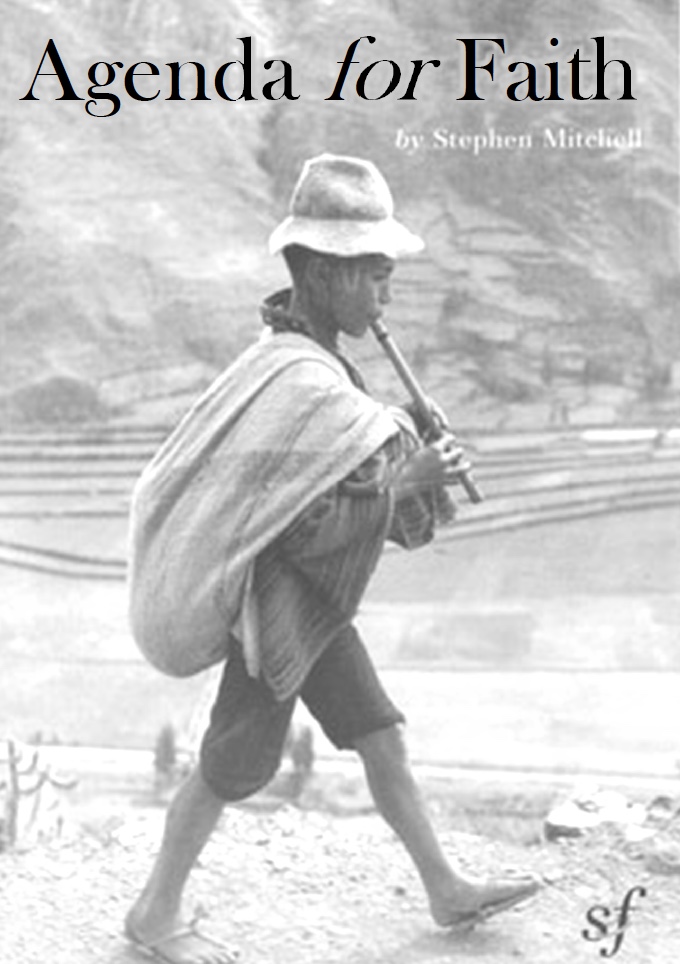
from sofn.org.uk/pages/agendaforfaith.html
I miss Ronald and David and I also miss the arguments within the church, the discussion group set up in Leicester Diocese by Bishop Tom (to his credit) with Professor Anthony Thiselton, and the more public debates. Gone are the days when to my shame I had three letters on the same page in the Church Times (under three different names). I’m no longer the ‘jelly fish on Dover Beach’ (as Charles Moore described me) nor do I keep scrapbooks of Sea of Faith reference in the press.
Now I argue that a non-realist theology is as close to orthodoxy as one can get. Rather than hanging on by my fingertips, I feel my faith places me at the very centre of the church. But that tends to make me feel homeless, defending the church to Sea of Faith friends and despairing over a church in which it is increasingly embarrassing to admit to being a priest. I have joined my local chapter (the collection of neighbouring clergy), I still occasionally preach and play the organ. Perhaps it’s time we started making waves again.
Stephen Mitchell, a former chair of the SOF Steering Committee, is a retired vicar and occasional blogger, who enjoys making music. His Agenda for Faith is downloadable as a free pdf at: sofn.org.uk/pages/agendaforfaith.html. His God in the Bath was published by John Hunt Publishing in 2006.