
Being human is both easier and harder than it has ever been: easier in that most humans today have unprecedented access to effective health care, labour-saving devices, and immediate touch-of-a-button information from all around the world, but harder in that things have never been more complicated in terms of our impact on one another and the planet. The pandemic and the war in Ukraine have been stark reminders of how trouble and turmoil in one part of the world can quickly spill over to impact the rest, with often disastrous effects.
We modern humans, for the first time in our species’ roughly 200,000–300,000-year history (depending on which definition of modern human you use), are now collectively responsible for the fate of every living thing on Earth. We are a young species in comparison to many. We have barely had time to adapt to the environments that nurtured us, let alone to adapt to the great transformations to that environment which we have brought about ourselves with the agricultural and industrial revolutions. With all the naivety and frailties of our species’ youth, we now find ourselves in a position where, in order to survive—let alone flourish—we must somehow accelerate the pace of our rational, emotional, and ethical maturing to match the pace of change brought about by the ingenuity with which we’ve been able to exploit the Earth’s resources, not only to meet our immediate physical needs but, in many cases, to satisfy the excesses of our greed.
Our Global Existential Challenges
The global challenges we face, such as climate change, the toxification of land, sea, and air, mass extinction, and the possibility of nuclear conflict, urgently require innovative, ethical, rational, and evidence-based solutions, as do the potential threats from unregulated artificial intelligence and bio-engineering technologies. We also face the spectre of exploitation by autocratic and corrupt governments and multi-billion-dollar private companies, which have ever-increasing technologies that will enable them to survey, intimidate, exploit, and control vast populations.
And as if all this wasn’t enough to contend with, our human world is still blighted by grave social injustices, such as poverty, wealth inequality, gender inequality, modern slavery, corruption, violence against women and children, systemic racism, and the persistence of bigotry and intolerance in all its ugly forms.
While governments and political movements must take the lead in rising to these challenges, and while we must all support those governments and political movements which do, the work of ethical, philosophical, and spiritual leaders should not be underestimated. Community leaders who persevere in the struggle for reason, kindness, and social justice without party-political affiliation, and often in the face of considerable adversity, keep society awake to the full extent of the problems and challenges we face. Many great ethical and spiritual leaders came from faith and belief communities, but unlike most senior clergy and heads of religion, they had the ability to transcend the dogmatism, tribalism, and many of the superstitious aspects of their traditions.
However, many of our so-called spiritual leaders, and the institutions they represent, are woefully out of date in their ethics and approach, and have been for decades—and yes, I am talking about religious leaders. Many religious leaders, for example, in the UK, are heeded and respected by only a very small and rapidly diminishing proportion of the population, in spite of their continued privileged access to the media.
As well as in Europe, secularisation is also continuing at breakneck pace in many other parts of the world. With the decline of faith and belief affiliations in many parts of the world, and with the ever-present threat of fundamentalist, exclusivist, and dogmatic forms of religion which still have their strongholds, our need has never been more urgent for dynamic and sustainable models of progressive ethical and spiritual leadership, fit for the 21st century and beyond.
While only 5% of the UK population are Humanists, the movement is now mainstream with many high-profile members and patrons of Humanists UK. We know that somewhere between 20 and 30% of the population now share the humanistic worldview, indicating that many people are Humanists without affiliation or without awareness that there is a name for their worldview. Additionally, many people, including people in the SOF network no doubt, are progressive or humanistic in their religious expressions, and will have much more in common with Humanists than with the more conservative wings of their own faiths or denominations.
We live in an increasingly multicultural and pluralistic society. Whether we like it or not, the only thing capable of holding us together is common values. We are enormously diverse when it comes to culture. This doesn’t mean that with the decline of religion our ethical and spiritual communities have to become blandly uniform or that they will have to take on a sort of global Western liberal culture. On the contrary, we should celebrate and encourage the emergence of multiple progressive and humanistic communities that preserve the distinct cultures, traditions, histories and heritages of their peoples even if in modified, reinterpreted and repurposed forms.
A Declining Congregational Model
When I came to the realisation that religious communities were not modernizing enough, or at all in some cases, I became curious about non-religious and humanistic communities led by agnostic and atheist ministers. I went along to a few of their gatherings and found their creative and thoughtfully choreographed services incredibly refreshing, often deeply moving, and more inclusive than anywhere I had been previously.
However, I still felt somewhat uncomfortable with the congregational model, especially with its one-man-ministry style of leadership, which depends too much on the charisma and public speaking abilities of one person (and yes, while there are some women doing this, it does still tend to be male dominated even in progressive circles). I also started hearing increasingly from colleagues, friends, students, staff and people more widely, in conversations about spirituality and community, that while progressive faith and non-religious congregations were somewhat intriguing and might make an interesting one-off experience, there was very little interest or enthusiasm for joining such a congregation.
My overriding feeling was that these congregational set-ups were too limiting. So, while they may still have a place—even if a transient one—something more sustainable is needed. I’m going to argue that our energies would be far better focused on the following three areas: We must create independent local social enterprises focused on ethics, spirituality, philosophy, wellbeing, community, and activism, which have premises central to every town, and which remain outside state institutions. We must also build, reform, and expand upon a multi-faith and belief chaplaincy model of spiritual leadership and care, which is embedded within state and private institutions. Thirdly, we must create sites and trails of multi-faith and belief retreat and pilgrimage, which link ethical and spiritual growth to place, cultural identities, and heritages.
Independent and Inclusive Social Enterprises
The social enterprise model would largely replace the congregational model and could also field chaplains to institutions. It would take the form of an elected board of directors, possibly a figurehead, such as a president for ceremonial purposes, and many specialist leaders and teachers giving talks, leading workshops and engaging in activism. There would be a strong focus on inclusive spirituality, ethical engagement and activism. They would, importantly, be independent from state institutions, and therefore more able to make constructive criticism of state and society as a critical friend, and freer to offer social commentary and openly discuss controversial ethical issues.
Further advantages to this model are that many more and diverse minds will be involved in the centres’ direction and strategy. There would also be far more scope to involve experts from multiple fields and therefore to interest and cater for many more people in any given district. For example, while one person might come along every other day to socialise in the hall or café and attend a weekly meditation class, another might choose to attend the occasional public lecture and have a monthly massage. Thus, these centres would take a holistic approach to the person rather than only focusing on a weekly gathering.
They would be less likely to become ideological or dogmatic because of their inclusion of a broad, collaborative leadership base, and the reflective experiences available to people would be much more varied, so that no one would have to look elsewhere for ritual or music or for silence and stillness.
Multi-Faith and Belief Chaplaincies
Social enterprises maintain their independence, but chaplains, on the other hand, work in hospitals, mental health, prisons, the military, schools, universities, and for the police, ambulance and other emergency services. They are embedded within (and often employed by) institutions and so are bound by their rules, which is both empowering and limiting. This is why it is important to combine multi-faith chaplaincies with independent social enterprises, so that plenty of ethical and spiritual leaders remain independent of institutions, and chaplains themselves will benefit from having more than one allegiance, if they remain formally accredited by external faith/belief organisations in addition to being employed by the institutions they work for.
As a chaplain myself, my particular passion is for making the highest standards of inclusive spiritual care available to all, equally, everywhere. Our institutions are often good at meeting our basic physical needs, but they have less time and fewer resources to address our higher needs for meaning and purpose. The latter are often considered a luxury once our basic needs have been met, but the reality is that it’s our higher needs that motivate us to get out of bed each morning and attend to our basic needs in the first place. Pastoral and spiritual care is about helping people, often when they are in difficult and painful circumstances, to connect to the things that give their lives meaning, purpose and joy.
In many settings, chaplains have an educational and awareness-raising role through publications, public speaking and other media. They are well placed to raise ethical issues with management, to facilitate ethical and interfaith/belief engagement and dialogue more widely in an institution, and to speak out publicly about issues of social justice, environmental sustainability and human rights. They have a responsibility to advocate for marginalised and oppressed groups among staff or service users and for any individuals experiencing bullying, harassment or discrimination. Chaplains are also called upon to mediate and engage with the media in times of crisis and controversy.
Like clergy, therefore, chaplains are often expected to fulfil both ‘priestly’ and ‘prophetic’ roles, and many of the traditional clergy-chaplains like to think they can do this. But again, the reality is that most of them are better at some aspects of the role than others or good at some and poor at others. The benefit of multi-faith chaplaincy set-ups is that there can be teams large and diverse enough to provide not just a wide base of faith and belief knowledge and associated cultural content, but also a broad range of talents, skills, ethical knowledge and interests.
However, the greatest obstacle to overcome in realising this model is that, while much lip service is paid to equality, diversity and inclusion at senior levels and in documentation, the overwhelming majority of UK chaplaincies simply are not multi-faith and show very little sign of wanting to open up and include people of other faiths and beliefs. In fact, discrimination is widespread, even where it blatantly contravenes the Equality Act, and teams where lead chaplains or chaplaincy coordinators are inclusive, both in word and deed, are very few and far between.
To gauge how many chaplains may actually support a truly inclusive and multi-faith vision, I have started an Inclusive Chaplains’ Network (currently on LinkedIn and Facebook) for professional and voluntary chaplains and chaplaincy partners who are committed to opening up and transforming chaplaincy into a fully inclusive multi-faith/belief service, supported by similarly inclusive chaplaincy partners in the wider community. This vision includes proactively reaching out to and welcoming chaplains and chaplaincy partners from all faith and belief traditions, ethnicities, genders, cultures, sexual orientations and social backgrounds, and making it possible for those with relevant knowledge, talents and skills from all philosophical/non-religious and religious traditions to join the profession on an equal standing.
So, I clearly - perhaps naïvely - still see enormous potential for chaplaincy, but unless we overcome the challenges I have described, chaplaincy will be further marginalised and may eventually even be phased out in many institutions for failing to remain relevant and failing to evidence its usefulness. This would be a terrible shame, given that ethical and spiritual leadership and care is much more effective when it takes place both outside and within our institutions.
Sites of Retreat and Trails of Pilgrimage
There have been significant increases in people going on pilgrimages and attending retreats in recent years, no doubt because of a yearning to connect to the Earth in its time of distress and to connect with each other in times when we have felt most disconnected. The interesting thing about this is that it’s not simply because religious people are experiencing a renewal of their faith, but that many non-religious people are taking part in order to reflect for themselves on the meaning and purpose of their lives and on their values, beliefs, and priorities.
Some of the most profound experiences and vivid memories in my own life were formed in places such as Iona, which have long received pilgrims and been home to spiritual communities that were often welcoming in ways ahead of their times. There is still a place for these ecumenical and interfaith communities with wider followings of associate members and friends, with Iona, Taizé, and others maintaining their core membership and still attracting large numbers of visitors. It has long been a dream of mine to establish a multi-faith and belief pilgrimage in the South West, but my earlier plans for one in 2019 were thwarted by the pandemic.
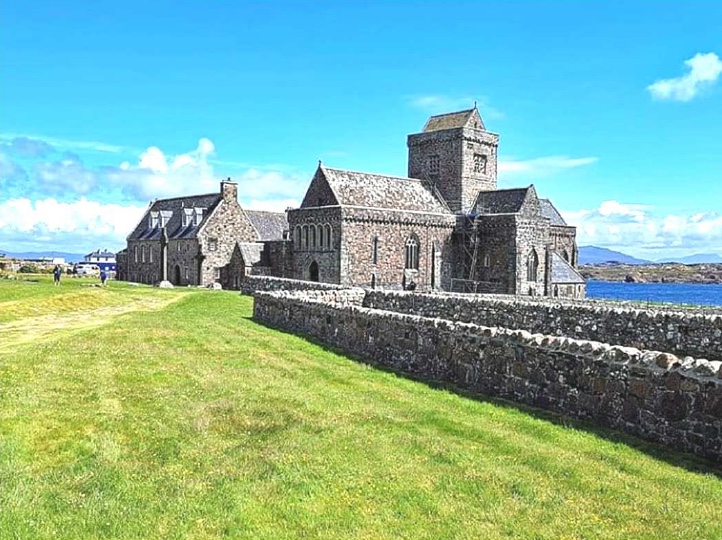
Iona. odysseytraveller.com
Conclusions and How You Can Help
I’m aware that there’s a huge elephant in the room which I’ve been so far avoiding, and that comes in the form of a question. Do people really want all the things I’m envisioning here? Apart from the obvious issue of whether people want to be inclusive, do they even really want reasonableness, kindness, peace, and sustainability? When they measure the cost to themselves of this struggle, are they really committed? Are you? Are people motivated by ethics and compassion, or are money, possessions, power, and sexual gratification ultimately more appealing? Is goodness, kindness, and peace boring? The truth is that I don’t know the answer to these questions.
So, the first thing we should do is ask ourselves honestly whether we really are committed to the ideals I have described. Do you really want a just and peaceful world, do your neighbours really want this? If you do, then there are some things we can all do to help us get there. If you are on the outside looking down your nose at all progressive faith and humanistic communities, I would challenge you to reconsider and join or rejoin one, however imperfect and frustrating at times. Your hands are dirtier with what might be called ‘sins of omission’ by not engaging than they would be sullied by engaging with the occasional impossible person or making the occasional mistake! Join and support one of the faith, belief or ethical organisations, which field (or have the potential to field) inclusive chaplains, and from which might emerge the very people who will found those vital social enterprises and other initiatives. If you cannot find a creative community of inclusive and progressive thinkers in your area, who seek to enrich culture, promote wellness, live sustainably, and form deeper connections, then perhaps you should start one.
-----
In January 2020, Dr. Anastasia Somerville-Wong became the first Humanist Chaplain to join the Multi-faith Chaplaincy Team at the University of Exeter. She is also a Chaplain with the Community and Mental Health Team at Somerset NHS Foundation Trust. This is a shortened version of the talk she gave to the 2022 SOF Annual on Being Human.