Dave Francis describes the Network’s work in religious education: the rise of the ‘nones’, the Solarity materials for clubs and schools, the Big Ideas for RE programme, and contributions to BBC Bitesize.


Dave Francis describes the Network’s work in religious education: the rise of the ‘nones’, the Solarity materials for clubs and schools, the Big Ideas for RE programme, and contributions to BBC Bitesize.

Second of three reflections on religious education in England: the Curriculum and Assessment Review of 2025 recommends RE join the National Curriculum, compatible with the ‘religion and worldviews’ and Big Ideas for RE approaches. Advantages, disadvantages and hopes are weighed.

Network Matters column on the Network’s educational charity purpose and Sofia’s aims. It reviews critiques of the World Religions Paradigm, lived religion, religious literacy and the Religion and Worldviews approach.
Dave Francis and Denise Cush describe the neglect and structural problems of Religion and Worldviews Education in England and argue for an objective, critical and pluralist approach that students can find personally transformative.

Rupert Wegerif argues that schooling has produced a crisis of meaning and proposes using generative AI and dialogic education in RE for reflection and a global conversation about what gives life meaning.

Beth Singler examines religious responses to artificial intelligence, including ‘LLM theisms’, AI-generated theology professors, and techno-optimist narratives that borrow religious ideas, and urges critical reflection in education.

Louisa Jane Smith argues that religious education can rekindle a love of learning by fostering curiosity, and offers classroom strategies on questioning, challenge, analogies, stories and sensitivity.

Describes a Big Ideas for RE unit marking a century since the Scopes trial, which combines religious education and science lessons on evolution, creationism, interpretation of texts and worldviews for ages 11 to 14.

Dave Francis argues that the rise in elective home education, unregulated and rarely including religion and worldviews, threatens children’s religious education, and calls for monitoring while noting Oak Academy’s RE provision.

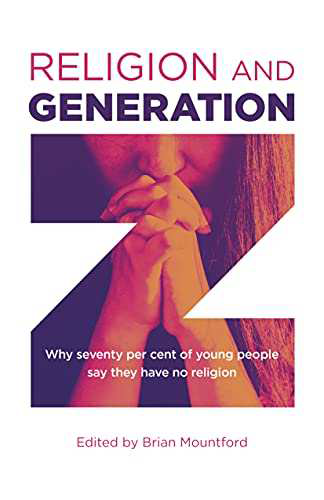
Denise Cush reviews Religion and Generation Z, nine Oxford student essays on why young people say they have no religion, and comments on RE, non-Abrahamic traditions and the religion/no-religion binary.