
Bringing together liberal religious individuals and communities by Łukasz Liniewicz.
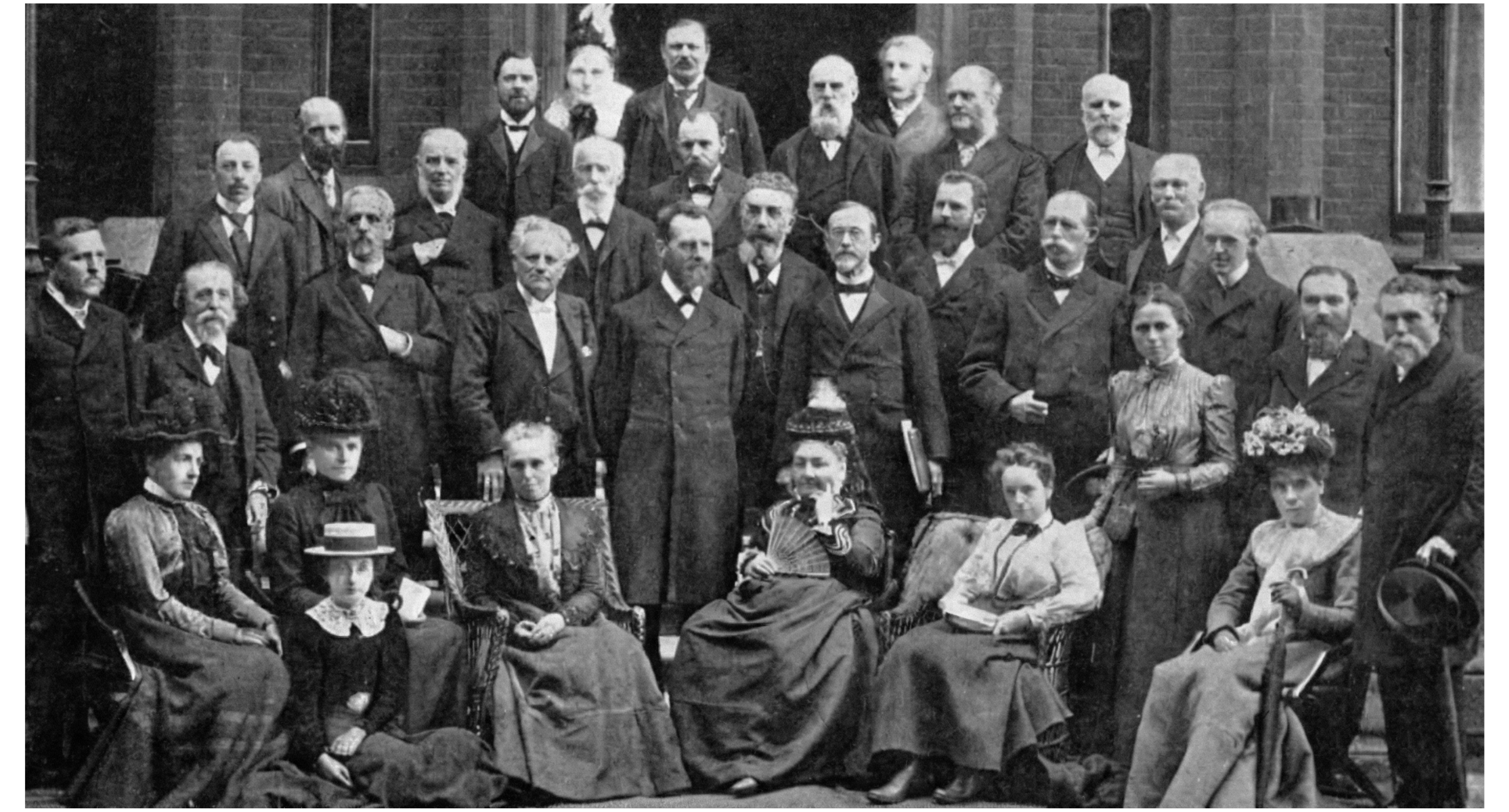
The Council of Unitarian and Other Liberal Thinkers and Workers, which met for the first time 125 years ago in London, has survived to this day. We refer to that meeting as our first Congress. In 2023, we held our thirty-sixth. The organisation's name changed, in fact, more than once, and even its understanding of its mission has fluctuated somewhat, yet the core has remained.
It has been a long journey — we are the oldest international interfaith organisation. Yet it was a short one as well, from another point of view. It happened in the span of the very last sentence, maybe just the latest clause, of humanity’s story. It shows how our horizons have broadened and how time has picked up its pace, such that so much could happen in so little time among so many people from so many distant parts of the world. Perhaps the best illustration for this journey is neither a line — straight, upward, downward, jagged or otherwise — nor, hopefully, a circle, but a spiral. A spiral illustrates, as well as any material metaphor can, that, despite many turbulences and changes of course, identity can be preserved while not fossilising. Even an identity based on commitment to fluidity, change, questioning and liberation from intellectual, spiritual and material constraints. And such is liberal or free religion, which those gathered in London in 1901 professed — a process, a method, an attitude rather than a set of statements about reality, with the exception of a small number of normative assumptions or tenets like the dignity, freedom and fundamental equality of human beings.
A spiral, though three-dimensional, conveys something about the flow of time, perhaps because it invokes in us the image of a flight of stairs and movement. From a certain point of view, on a certain plane — looking downwards — it may appear that the IARF has arrived at its point of departure. In 2025, following a period of intense reflection and vigorous action on the wave of enthusiasm and renewed commitment brought about by our thirty-sixth Congress, we adopted a Vision Statement. It starts with a brief identity affirmation — that we are an organisation bringing together liberal religious individuals and communities. You won’t find there the exact same phrasing as that used by those gathered in 1901 — 'to open communication with those who, in all lands, are striving to unite pure Religion and perfect Liberty, and to increase fellowship and co-operation among them'. These words, uttered at a completely different time, a time of optimism and staunch faith in human progress, have an archaic and pompous ring to them, but their spirit has been reiterated with full conviction. It is significant because, though the IARF never completely abandoned this focus, it has been growing and changing, engaging in new endeavours and self-reflection. Now, it has been embraced again as our raison d'être.
For a period of its history, the IARF concentrated on advocacy for freedom of religion or belief and on facilitating broad interfaith dialogue, especially in the 80s, 90s and early 2000s. We value that part of our history very much and are proud of what we have accomplished since being granted official status with the United Nations (UN) in 1955. In fact, this year marks the forty-fifth anniversary of the Declaration on the Elimination of All Forms of Intolerance and of Discrimination Based on Religion or Belief (a mouthful, indeed), adopted largely due to the efforts of IARF representatives collaborating closely with our members and partners, such as the Unitarian Universalist Association and Religions for Peace. Though only a declaration and not binding, it broke a decades-long impasse between the Western and Eastern blocs, and created the momentum needed to appoint a Special Rapporteur for Freedom of Religion or Belief (as the office is now called) and the NGO Committee for “FoRB”, an acronym you will come across often. The first president of that Committee was an IARF member and served on behalf of the IARF — our longstanding representative to the UN in New York, Susan Nichols.
We grew in numbers, in terms of members, staff and budget, and turned into an established, well-structured body that scarcely resembled the spontaneous, somewhat chaotic movement from the beginning of the twentieth century (it was formed a day after the idea emerged among the attendees of the American Unitarian Association’s seventh-fifth anniversary, without arduous planning or orchestration). It had a president and a secretary, but no headquarters or staff on payroll to speak of. In fact, much could be said about the prominence of the IARF — an organisation significant enough to receive a special invitation to send observers to the Second Vatican Council, counting among its members the greatest liberal religious thinkers and workers of the twentieth century — among them Schweitzer, Tillich, Luther Adams, von Holk, and countless others. This period of growth was interrupted by two World Wars but continued, resulting in many accomplishments. The IARF obtained a position at the UN among the most important non-governmental organisation of the time, engaged in dialogue with the biggest and most influential religious movements, attracted countless prominent members of the highest intellectual and moral standing, expanding to include ever more traditions, cultures and countries, and even developed its own poverty relief programme, the Social Service Network, which operated for two decades under the leadership of Lucie Meijer and completed numerous projects, including building schools, orphanages and women’s centres in India, the Philippines and elsewhere.
Yet no story is really worth telling if it isn’t candid and excludes the less glorious of its pages. After this expansion and branching into new territories, a crisis emerged. Perhaps it was a crisis of identity and motivation, which manifested as a result of moving in a more generic advocacy direction, uprooted from the native liberal soil, perhaps purely circumstantial, but in the early 2000s the secretariat diminished to just one person, and when I started at the IARF, over a decade ago now, to just half a person working from home. The budget allowed for making a couple of grants each year, but not much more. The new leadership, elected at the Birmingham Congress the year prior, had a daunting task awaiting them: thorough reform encompassing both the shell — the legal and administrative arrangements — and the spirit.
Personally, I was very lucky to work with such people as Wytske Dijkstra and Robert Ince. Ultimately, it turned out to be a very rewarding task that helped me learn and grow in many ways, but it has also been frustrating. I remember my late partner teasing me from time to time, saying that I worked for a glorified Reisebüro. It did feel like that sometimes. It’s often difficult to point to the exact cause or beginning of a significant change, a watershed moment, in the lives of people and communities alike. But, ultimately, the tide turned. After decades spent in a downward spiral, to use that metaphor again, there came a breath of new life. Speaking of breath feels right, because, in many of our traditions and also in my own experience, liberal religion is about the spirit, symbolised by air or flame, which moves where it wishes, unconstrained, free, escaping definition and ever surprising, gifting new beginnings.
The time following our last Congress was the busiest, most inspiring—and also most tiring — that I have ever experienced at the IARF. It has shown that neither the IARF nor liberal religion is dead.
The new energy focused on three areas: community, education and advocacy. Community building and education have an internal dimension of serving our members and helping them connect both as groups and individuals, now aided by countless new tools offered by our digitising world. Personal connection is irreplaceable, of course, and so are the Congresses, but the relationships and ideas born there can now be cultivated and grow so much more easily. We’ve started a social and collaborative space for our members and allies to support a growing number of volunteers to collaborate more effectively, for our members to easily connect on a grassroots level, and to provide tools for other projects. Perhaps the most important one is the Free Religion Institute, an (e)learning project that encompasses a digital library, webinars and courses focused on the inspiring and liberating potential of religion and reason. Then, we are investing a lot of resources into advocacy, at the UN and elsewhere, to help amplify the liberal religious voice and the plight of those who experience oppression, from small progressive faiths to indigenous people, and join the work for a more just world for all, regardless of belief, sex, ethnicity, gender identity or sexual orientation. We want to help bring progressive Christians, Jews, Muslims, Unitarians, Buddhists and countless others closer together to demonstrate that religion is not an inherently constraining, oppressive, backward force, but a source of inspiration and thirst for knowledge, liberation, justice and peace. This is the religious freedom we believe in, a personal and communal liberty to question, learn and grow as human beings — not merely freedom of religion, but freedom within it. Though what we believe, the words we use to describe it, and the rites we hold to help us experience it have definitely changed over the last 125 years, the how has not. The words spoken at the London Congress now sound a bit silly to our ears, certainly quite pompous and perhaps even naive — such as when pure Religion was invoked — but I believe the faith in the freedom and divine inspiration of the individual, manifested and strengthened through personal and communal relationships without coercion, has not disappeared or fossilised.
We welcome all to join us on this journey of learning, work and celebration. Please visit our website, sign up for the IARF Network to get to know our members from all around the world, access our course and resources, and perhaps even consider volunteering if this vision resonates with you.
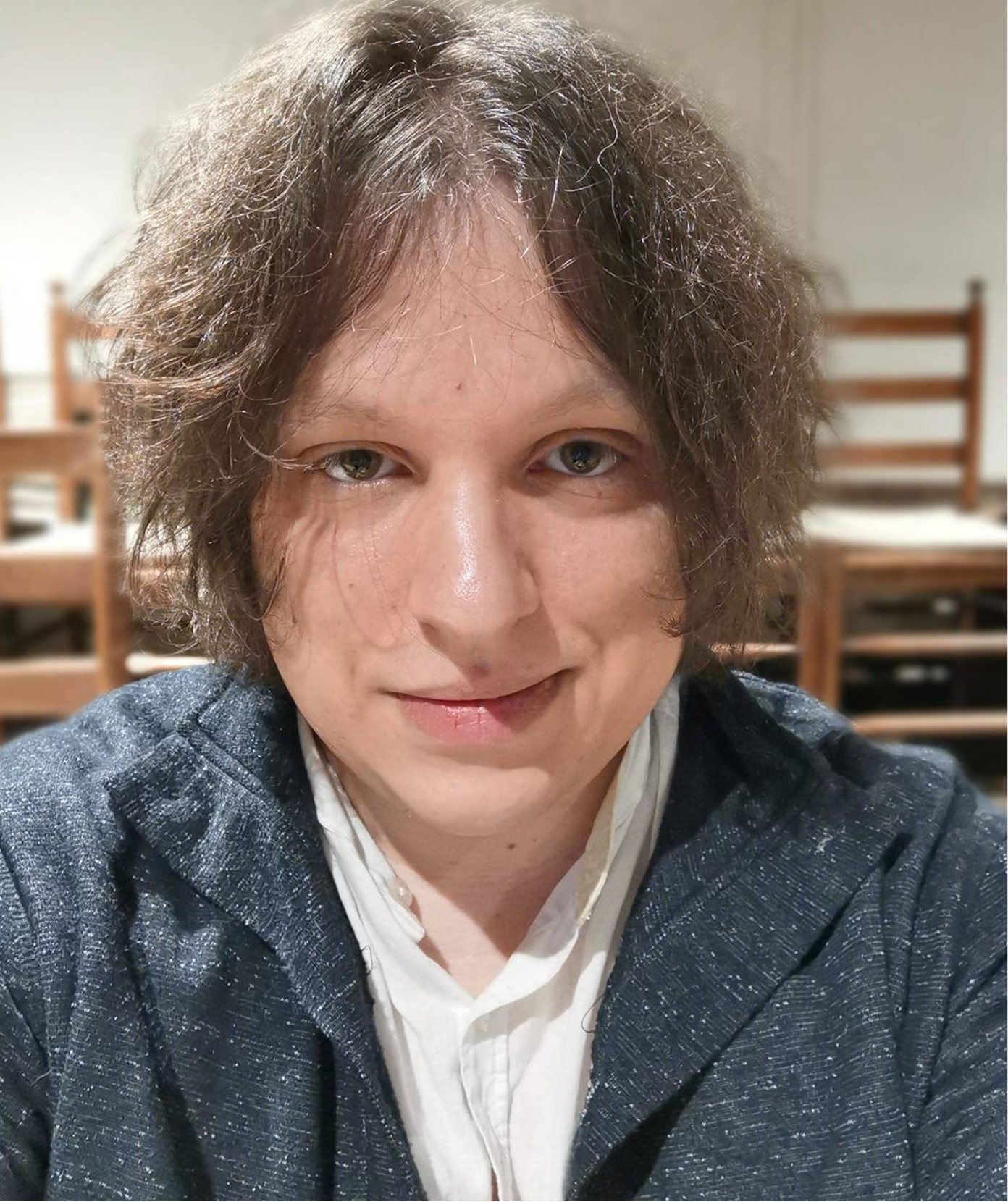
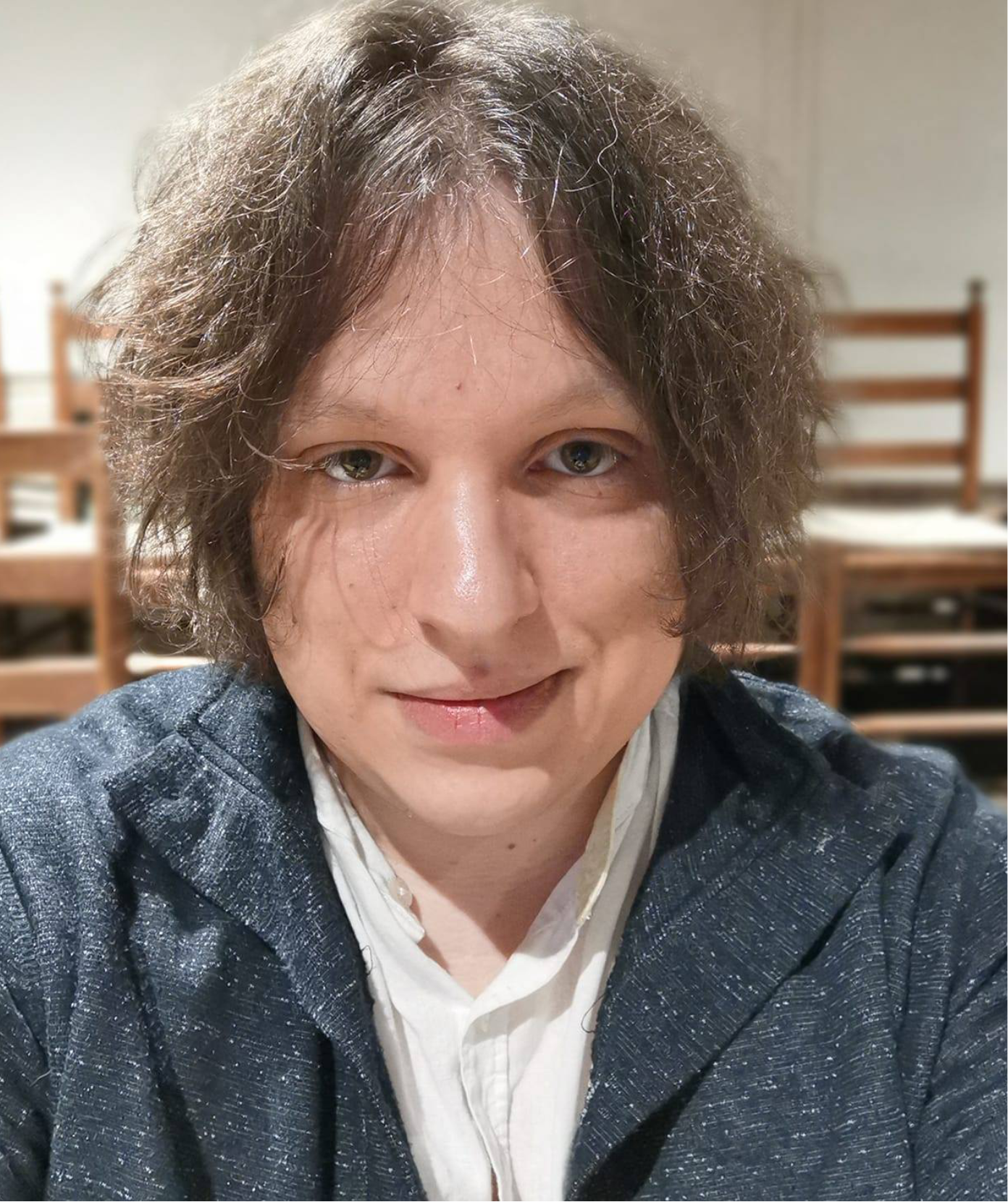
Łukasz Liniewicz is Executive Secretary of The International Association for Religious Freedom (IARF) www.iarf.net
The IARF has general consultative status with the Economic and Social Committee of the United Nations.
Photographs credits
Top: Messrs Eliott & Fry, from the archives of IARF. Printed in W. Copeland Bowie (ed.), Liberal Religious Thought at the Beginning of the Twentieth Century: Addresses and Papers of the International Council of Unitarian and Other Liberal Religious Thinkers and Workers, Held in London, May, 19o1 (Elsom & Co, 1901). Available at https://archive.org/details/bwb_KU-773-299/ accessed 22 January 2026