
Nicholas Peter Harvey reviews The Jesus Myth: A Psychologist’s Viewpoint by Chris Scott. Christian Alternative (Alresford: 2022). Pbk. 80 pages. £7.99.
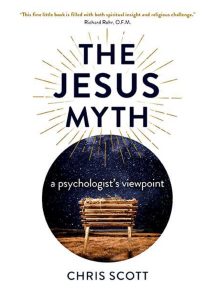
This very short and accessible book carries high-toned encomiums from such luminaries as Richard Holloway and Martin Percy. This praise is richly deserved. The book’s thesis is simply summarised: we would be wise to view the story of Jesus through the prism of Jungian archetypes rather than as historical narrative. This writing is much less guarded than mainstream theology tends to be: ‘…to believe in Jesus Christ as a historical and supernatural figure prevents the believer from actually having to discover his or her own Christ archetype and live it in the world’ (p. 38).
The author concedes nothing to the prejudice of those who suppose that a mythic account is somehow less true than a historical one. Rosemary Haughton pointed out long ago that humans have recourse to the language of myth to express truths that would otherwise remain unexpressed. Dogmatic religion is seen here as protecting us, individually and corporately, against fears that beset us. At the same time, Christian orthodoxies ‘have killed, tortured, silenced and psychologically damaged thousands of people’ (p. 41).
The author is especially severe on all claims to religious superiority. Yet our denominations came into being because of the claims made by the different groups concerned. Scott believes that every revelation has something to give and something to learn. He argues that ‘religions try to point in the direction of God, but because we are limited by human perception and historical circumstances it is inevitable that all fall short of the reality’ (p51).
Modern church leaders insistently emphasise the importance of mission. But this author thinks that in these terms the mission is only to say the same old things only louder!
As one who has been exposed over the years to many such proclamations, not least by popes, I can only echo this conclusion. I recall the sinking feeling that accompanies the realisation that there is nothing creative here. Such weariness of spirit is effectively countered in this determinedly hopeful book.
Nicholas Peter Harvey has taught moral theology at Birmingham and elsewhere. He is a former Benedictinemonk at Downside. His book Unknowing God is reviewed on page 26