
These pages will consider an aspect of the Network’s work in each edition. This edition considers the Sofia and its aim.
The Charity
The Sea of Faith Network is an educational charity that exists ‘to advance the education of the public in religious studies with particular reference to religious faith seen as a human creation’. (Charity № 1113177) Its website explains its desire to:
- Explore the idea of religion and religious faith as human creations.
- Promote the validity of creative, human-centred religion.
- Affirm the continuing importance of religious thought and practice as expressions of awe, wonder, and celebrations of spiritual and social values.1
The reference to promoting is essential, for while the Charity Act (2006, rev. 2011) gives a broad ‘wide meaning’ to education, it nevertheless stresses that:
To be a charitable aim for the public benefit, education must be capable of being ‘advanced’. This means to promote, sustain and increase individual and collective knowledge and understanding of specific areas of study, skills and expertise.2
Sofia Magazine
Sofia aims to be an engaging and stimulating read that effectively fulfils the Network’s purpose of ‘exploring and promoting religion and worldviews as human creations for this life’ (Sea of Faith AGM, 2024). There are three intended audiences that the magazine and its contributors need to bear in mind:
- Network members, who support and participate in the work of the charity.
- Non-member Sofia subscribers and friends, who receive a copy.
- Online readers, and others to whom it is sent to promote the charity’s work.
The Charity Commission’s guidance on charity legislation explains that for an educational charity, ‘the concept of public benefit is integral to a charitable purpose’. This public benefit should be for ‘the public in general, or a sufficient section of the public’.6
Sofia‘s appeal to subscribers, friends, and online readers is central to The Sea of Faith Network’s public benefit as an educational charity. Subscribers and readers might well include individuals who became aware of the SoF Network through its other charitable work, including Big Ideas (https://bigideasforre.org) and Solarity (https://www.solarity.org.uk).
To ‘advance the education of the public in religious studies’, Sofia takes an interdisciplinary approach to religion familiar in educational circles, exploring religion through theology, philosophy, science, social sciences, and humanities. However, the subject of religious studies evolves through disciplinary self-reflection, and Sofia must take stock of this to achieve its educational aim.
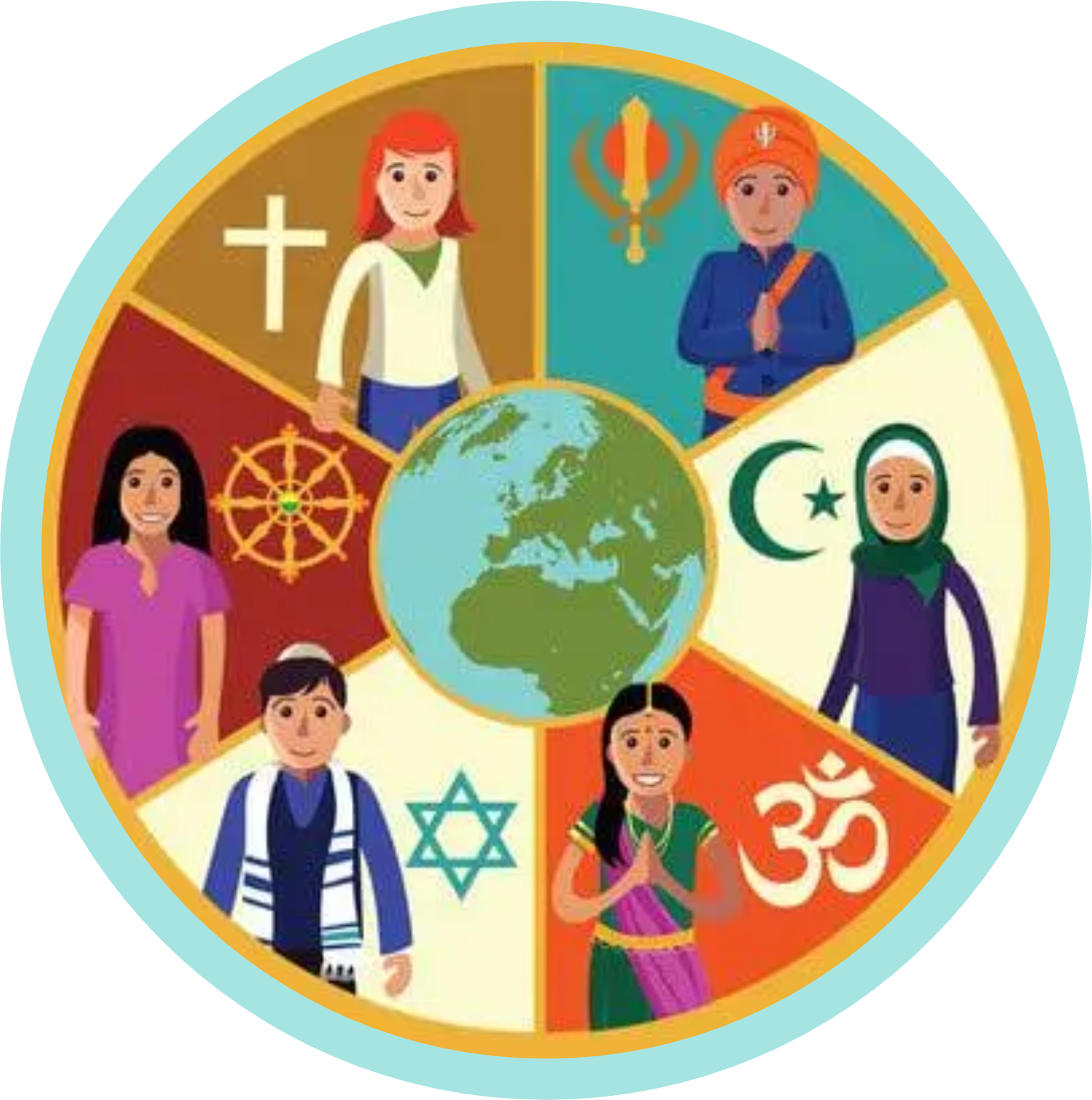
World Religions Paradigm
Auguste Comte indirectly influenced the study of world religions. His Positivism took a sociological approach to religion, reframing it as social phenomena, which he viewed through a developmental framework. His work influenced Victorian taxonomies of religion in the fields of anthropology (E.B. Taylor, J.G. Frazer), sociology (H. Spencer), philology (Max Müller) and theology (C.P. Tiele).
A key figure in the development of comparative religion is Max Weber, who, alongside Protestant Christianity, studied Confucianism and Taoism (1915, tr. The Religion of China, 1951); Hinduism and Buddhism (1916, tr. The Religion of India, 1958); and Ancient Judaism (1917–1920, tr. 1952).
In the 1960s, Ninian Smart promoted the exploration of religion through a variety of phenomena (rituals, texts and narratives, beliefs, experiences, ethics, and institutions).3
Smart’s work helped replace the emphasis in schools on ‘religious instruction’4 understood to be Christian moral formation, with critical inquiry. It broadened the study of religion beyond Christianity to include other religious traditions in schools and universities. However, it led to a World Religions Paradigm (WRP) in which religions were viewed as distinct and mutually exclusive, and were viewed through a lens of Christian assumptions and categories that was implicated in geo-political power imbalances.5 For example, such a study was:
- Text-centred: A Western emphasis on language and text had been formed by the philological emphasis of Renaissance Humanism, by biblical translations and studies in Protestantism, and Latin and Greek classics in elite education in Britain. A textual focus was extended to Sanskrit, Pali, Classical Arabic, etc., privileging literate and philosophical religious traditions. But this overemphasises texts, such as the place of the Vedas, in Hinduism.
- Belief-centred: The historical importance of Christian doctrine and systematic theology led world religions to be identified and distinguished by their beliefs. This unified traditions by minimising diversity and change. Traditions could also be viewed through Christian theology, as where Brahma, Siva and Vishnu were taken as a ‘trinity’ of sorts.
- Institutionally-focussed: As Anglo-catholics had popularised a denominational “branch theory” (of Charles Daubeny) to advance an understanding of the catholicity of the church, so non-Christian religions were approached through the lens of ecclesiology, ignoring traditions with greater fluidity that did not fit a denominational model.
- Experientially-focussed: Because of the emphasis on religious experience in Christianity, with writers such as Friedrich Schleiermacher, Rudolf Otto, and William James, religions were considered as sharing an essential experience of the holy or numinous (Otto). Such essentialism found theological articulation in John Hick’s multi-faith monotheism with religions taken as cultural interpretive frames of ‘experiencing as’.6
- Interpreted by Comte’s developmental theory and Western constructs of civilisation: Max Weber believed that ‘rationalisation’ would eliminate the magical and mystical elements of religion of ‘primitive’ societies as societies became more organised (reflecting his understanding of Protestantism), so religions were viewed through a similar frame of Western rationality. The idea of religion was separated from culture, law, and politics, and viewed through a secularisation thesis, born of the European experience of religious conflict, political secularisation, and religious institutional decline.
This world religions paradigm overlooked or dismissed the following aspects of religion:
- Insider self-understanding (an emic perspective in anthropology), by assuming a neutral “outsider” (etic) perspective of critical inquiry. The effect was to conceive and examine religions in a Western analytical framework derived from Protestant cultural perspectives.
- Diversity of beliefs and practices among various Christian, Buddhist, or Hindu traditions. Ignoring intra-religious differences (e.g., between established traditions, and in diaspora communities) oversimplifies and stereotypes traditions. This stereotyping makes it difficult to understand the varied religious responses to moral and political questions, within traditions, and risks supporting cultural, political, and racial stereotypes.
- Minor, new, or syncretic religions (such as Jainism, Shinto, Unitarian Universalism, Rastafari, Wicca, Druidry, and Cao Dai7), and spiritual practices (such as the ethical divination of the I Ching [Yijing]). This privileges some traditions, marginalising others. Such exclusion also applied to philosophical worldviews that influence spirituality and ethical ways of life, such as Deep Ecology, panpsychism, or contemporary Stoicism.
- The mixing of traditions, both in the syncretism of traditional non-exclusionary religions (such as the mixing of Buddhist and Confucian traditions in a Japanese home) and in contemporary hybridity (Buddhist Christianity, Jewish Paganism). Static categories fail to grasp the complexity and fluidity of religious influences and changing patterns of practice.
- The beliefs and practices of newer and emerging forms of faith and holistic spirituality as explored by sociologists of religion such as Paul Heelas and Linda Woodhead in the Kendal Project.8
Studies have coined many terms for changed patterns of religion and religious practice:
- Spiritualities of life (Paul Heelas)
- Religion in everyday life (Tim Jenkins)
- Invisible religion (Thomas Luckmann)
- Patchwork religion (Robert Wuthnow)
- Vernacular religion (Leonard Primiano)
- Implicit religion (Edward Bailey)
- New religious movements (George Chryssides)
These all challenge the normative category of religion established by the World Religions Paradigm, but have not yet overcome — and may even sustain — dichotomies between formal and informal religiosity, religion and spirituality, and the religious and the secular.
The World Religions Paradigm has also meant that the study of worldviews, beliefs, and spiritual practices as negotiated by individuals and communities has been, at best, secondary. This fails to help people as they seek to negotiate questions of faith and belief in everyday life. A new approach in both sociology and practical theology to the study of “lived religion” seeks to address this, exploring ‘religious as expressed and experienced in the particular of individuals’, rather than the general categories of religion.9
Alternative approaches to the study of religion have been developing. One of these extended the idea of literacy to religious literacy. While it is contested and can be politicised, religious literacy is still worth explaining.
Religious Literacy
In an early use of religious literacy in 1993, educator Andrew Wright used the phrase to refer to ‘the ability … to reflect, communicate and act in an informed, intelligent and sensitive manner towards the phenomena of religion’. He explained that religious literacy involves knowledge, interpretation, and the evaluation of ‘various claims to truth’ that enable pupils to think, speak, and act intelligently regarding religious issues.10
This definition of literacy might suggest that it is a functional skill, described as ‘the ability to read, decode and comprehend written texts’,11 rather than a critical academic discipline. This was not Wright’s intention, as the inclusion of evaluation of religious truth claims and his later work attest.
An influential definition by Diane L. Moore emphasises the intersection of religion with social systems and culture. She adds:
‘Religion has always been and continues to be woven into the fabric of cultures and civilisations in ways that are inextricable.’12
Moore understands religious literacy to be a necessary competency for citizenship:
Religious literacy will enhance democratic discourse by cultivating discernment, understanding, and respect as they relate to religion in […] public life.13
However, this is not merely a functional definition of literacy, equipping people to operate in the public sphere, for Moore situates religious literacy in the broader cultural literacy of the humanities disciplines. She is clear that religious literacy is a critical discipline of inquiry:
A religiously literate person will be equipped not only to recognise religious references, whether to texts, ideas, or practices, but also to critically interrogate how religion manifests in cultural and historical contexts.14
Religious Literacy as defined by Diane L Moore
Religious literacy entails the ability to discern and analyse the fundamental intersections of religion and social/political/cultural life through multiple lenses. Specifically, a religiously literate person will possess:
- A basic understanding of the history, central texts (where applicable), beliefs, practices, and contemporary manifestations of several of the world’s religious traditions as they arose out of and continue to be shaped by particular social, historical, and cultural contexts.
- The ability to discern and explore the religious dimensions of political, social and cultural expressions across time and place.
In the UK, the concept of religious literacy has been used in reports by All-Party Parliamentary Groups (APPGs),15 where it is understood as a civic skill essential to an inclusive approach to public life, and considered to be important in the media, the police service, and other workplaces where knowledge and appreciation of diversity are necessary. The APPG on Religious Education refers to four levels of ability — from a basic level of knowledge, to more sophisticated, nuanced and critical levels of understanding, interpretation, and engagement. To use a distinction made elsewhere, this moves from ‘functional literacy’ to ‘critical literacy’, involving higher evaluative and critical skills.

Religion and Worldviews16
Although religious literacy explores and reinterprets the concept of religion, as with ‘lived religion’, it can still privilege religion over non-religious and personal worldviews. But as the Commission on Religious Education (CoRE) notes:
The distinction between religious and non-religious worldviews is not as clear-cut as one might think. Individuals may draw on aspects of both religious and non-religious worldviews in their own personal worldviews.17
In Britain, Religious Education is understood to involve nurturing active questioning by pupils to explore how beliefs function and how identities are formed and negotiated. It is also seen to involve reflective and reflexive learning that equips pupils with the skills of self-understanding and self-awareness. This is ideally not merely a formative engagement, but what might be called ’emancipatory’,8 enabling pupils to question inherited assumptions and form their own worldviews, to navigate social complexities in a world of conflicting beliefs.
Educational circles in the UK have accepted critiques of the World Religions paradigm over the last 50 years, while also acknowledging critiques of the literacy framework. In England and Wales, the Commission on Religious Education (CoRE) and subsequent work by the Religious Education Council have adopted a ‘Religion and Worldviews’ approach as ‘the way forward’ for the subject in schools.
Looking Forward
Since 1988, the Network has explored religion as a human creation by considering the changing nature of religion and its intersection with culture, society and politics in conferences, local groups, and in 35 years of magazines.
Don Cupitt addressed the theme of ‘world religions’ at the 1997 SOF conference and elsewhere considered the issue of Jewish–Christian dialogue.18 The 2016 SOF conference took the theme, ‘Religion — Where Next?’, which was followed by some superb content in a themed edition of Sofia, No 121, in 2016.
The magazines have explored religion in literature, poetry, film, the visual arts and mythic imagination in both popular and high culture, and have also drawn on the humanities and social sciences disciplines for critical engagements with culture. Having edited SoF, 52–67, I’m delighted to be able to return to edit Sofia.
Both critical religious literacy and the Religion and Worldviews approaches provide a rationale for the ‘public benefit’ of the SOF Network as an educational charity, as it contributes to an understanding of religion as embedded in and shaped by cultural life. At the same time, religious literacy offers a framework of how individuals and communities might navigate the ‘symbolic universes’19 of religious and other worldviews, for existential, experiential, and ethical meaning and purpose.
As a part of the public benefit of the Network’s educational work, Sofia will therefore aim to foster critical religious literacy; exploring and promoting religion and worldviews as valuable human creations. At the same time, I trust, it will continue to be a stimulating, provocative, and enjoyable read.
Notes
- The Sea of Faith, ‘Education’ (n.d.) <https://sofn.uk/education/> [accessed Oct. 2025], from Sea of Faith 15 (1993), p. 2. ↩
- The Charity Commission for England and Wales, ‘Guidance: Charitable Purposes’ (16 Sept. 2013). <https://www.gov.uk/government/publications/charitable-purposes/charitable-purposes#the-advancement-of-education> [accessed Oct. 2025] ↩
- Ninian Smart, Secular Education and the Logic of Religion: Heslington Lectures, University of York, 1966 (Faber and Faber, 1968). ↩
- The 1944 Education Act, Section 25.2. ↩
- David Robertson & Christopher Cotter (eds), After World Religions: Reconstructing Religious Studies (Routledge, 2016) pp. 1–20. ↩
- John Hick, God and the Universe of Faiths (Oneworld Pub. Ltd., 1973); God Has Many Names (Westminster Press, 1980). ↩ ↩
- Caodaism is a syncretistic religion that was constituted in Vietnam on 7 October 1926 and established on 18 November 1926. ↩
- Paul Heelas & Linda Woodhead, The Spiritual Revolution: Why Religion is Giving Way to Spirituality (Blackwell, 2005). Cf. Linda Woodhead, ‘Spirituality’, Sofia 153 (2024) pp. 12–14. ↩ ↩
- Meredith McGuire, 2008, Lived Religion: Faith and Practice in Everyday Life (Oxford University Press, 2008) p. 3. See ‘Lived Religion’, Sofia 159 (2026), p. 8. ↩
- Andrew Wright, Religious Education in the Secondary School: Prospects for Religious literacy (David Fulton Publishers, 1993) p. 47, p. 79 <https://archive.org/details/religiouseducatio0000wrig/page/n1/mode/1up> [accessed Dec. 2025]. ↩
- Patricia Hannam, Gert Biesta, Sean Whittle, & David Aldridge, ‘Religious literacy: A way forward for religious education?’, Journal of Beliefs & Values, 41.2 (2020) pp. 214–226. ↩
- Diane L Moore, Overcoming Religious Illiteracy: A Cultural Studies Approach to the Study of Religion in Secondary Education (Palgrave, 2007) pp. 56–57. See also <https://rpl.hds.harvard.edu/what-we-do/our-approach/what-religious-literacy> [accessed Nov. 2025] ↩
- Diane L Moore, Overcoming Religious Illiteracy, p. 28. ↩
- Diane L. Moore, ‘Methodological Assumptions and Analytical Frameworks Regarding Religion: White Paper’ (Harvard Divinity School, 2024) p. 6. ↩
- The APPG on R.E., RE and good community relations (Religious Education Council of England and Wales, 2014). The APPG on R.E., Improving religious literacy: A contribution to the debate (Religious Education Council of England and Wales, 2015). The APPG on Religion and the Media, Learning to Listen: Final report of the APPG on Religion in the Media’s Inquiry into Religious Literacy in Print and Broadcast Media (2021). ↩
- For a helpful overview of the use of ‘worldview’, please see Céline Benoit, Timonthy Hutchings, & Rachael Shillitoe, Worldview: A Multidisciplinary Report (Religious Education Council of England and Wales, 2020). Available at https://religiouseducationcouncil.org.uk/rec/wp-content/uploads/2021/01/REC-Worldview-Report-A4-v2.pdf [Open Access]. ↩
- Commission on Religious Education, Final Report: Religion and Worldviews — The Way Forward (Religious Education Council of England and Wales, 2018) p. 6. ↩
- Don Cupitt, ‘World Religions’, SOF 27 (1996), pp. 7–11. See also Cupitt’s ‘Learning to Live with “Identity”’ [1997] on Jewish-Christian dialogue, in Radical Theology (Polebridge, 2006) Ch. 5. ↩
- A concept from Peter L Berger and Thomas Luckmann, The Social Construction of Reality: A Treatise in the Sociology of Knowledge [1966] (Penguin 1991) II.2b-c. pp. 122–46. ↩