
When I was a child I didn't know anyone who was ninety. I couldn't conceive of being ninety. Nonagenarians inhabited the mythical world of Methuselah. In middle age, in my first incumbency, eager to ingratiate myself with the older parishioners, I sent some flowers and a card to an octogenarian: ‘To one twice as old and twice as beautiful’. But the mathematician in me realised that as I grew older, that proportion would rapidly diminish. It's only now, having reached my allotted span that I've begun to appreciate ninety year olds, and I seem to know a great many. Mary rattles off Countdown anagrams and conundrums with astonishing speed. Joan plays the piano before the service with an enviable touch and dexterity. You might say they're the lucky ones. No, they all have their troubles but nearly all bear them with fortitude and good humour.
I find it hard to believe Don Cupitt is 90. Born on the 22nd May, he's a true Gemini (not that he'd give a fig for that fact). I consult the astrologer. ‘Geminis are very intelligent and pick up knowledge quickly.’ Tick. ‘They are perceptive, analytical, and great communicators.’ Tick. ‘A Gemini is constantly juggling a . . . .’ well he did teach my daughter to juggle when she was about eight years old. ‘They are the social butterflies of the Zodiac.’ Ah, not quite. I think you mean he’s a lepidopterist.
‘Energetic and quick-witted, a Gemini never gets stuck in the past, and doesn’t ruminate on what might have been.’ And probably a good thing too, given the way he was treated both by the church and academia. After the publication of Taking Leave of God, he received the same treatment by the church as John Robinson with Honest to God. Following the broadcasting of The Sea of Faith, the academic world also turned its nose up at this popularising lecturer. Today, with Brian Cox, Alice Roberts, Lucy Worsley, Hannah Fry, we expect professors to be on our screen, but not then. Exceptionally, Emmanuel College, Cambridge have remained a constant support and are hosting the celebrations of the fortieth anniversary of The Sea of Faith at which he hopes to put in an appearance.
Such disappointments have encouraged him to display enormous sympathy with those who have suffered because of the honest expression of their views. One who found Don supportive was the late Hugh Dawes, who died earlier this year, a friend and member of our Network and founder of Progressive Christianity Network Britain. Hugh had been the Chaplain at Emmanual College at the time Don was filming The Sea of Faith and had his own trial with the publication of his book Freeing the Faith: A Credible Christianity for Today. It put paid to any preferment in the church but he was well aware of the dangers.
Published in 1992 a year before Anthony Freeman’s God in Us, it’s still possible to pick up copies of Hugh’s book. It pulls no punches and having argued against various aspects of ‘traditional’ orthodoxy and for an open liberal faith, he ends ‘Finding a way forward from here demands that we now recognise that God too has to change, if what God represents is ever going to be available to future generations. Though in one sense, indeed, we can only live in the present moment, we surely owe it to those who follow us to take that future very seriously. That involves acknowledging the full extent of our human responsibility for creating faith, as well as for the world of which faith is a part. ‘(p120)
As his wife Jill wrote in the Guardian: ‘He was savagely attacked in the press by traditionalists, who called on him publicly to resign his orders. The Independent carried the story of the ‘atheist priest’. He braved the storm and proclaimed himself a catholic modernist priest, with no intention of resigning. He was a prophetic voice, often crying in the wilderness.’ One might expect support from the church for serious and enquiring priests, but it hasn’t always been given. ‘Do you believe in God?’ asked my bishop during an interrogation. ‘It depends what you mean by God’ I replied. ‘It doesn’t matter what you mean. Can you say it?’ One archdeacon, who I went to tell of my forthcoming separation, greeted me on the doorstep, even before inviting me over the threshold, with the words ‘Will there be a scandal?’ Don, on the other hand, said a simple ‘Bad luck!’. He offered the same response to me some to time later, when I told him of my new wife’s terminal illness. Not very sympathetic some said but it was exactly what I needed to hear. We didn’t want prayers for her healing, or an assurance that this was part of God’s plan for her, nor an enquiry as to what we might have done to deserve this (all of which were said to us).
And while I continue to take pot shots at my critics, Don remains true to his solar ethics: understanding, gracious, civil and living without resentment.
The Sun lives beyond the distinction between living and dying, because the thermonuclear burning by which it lives is also and identically the process by which it is dying. Its whole being is wholly both at once. Because it is utterly heedless, careless and identified with its own pure transience, it cannot in any way be self-defensive, which makes it a symbol of ‘glory’, or eternal life – a perfect synthesis of life and death that completely delivers one from self-concern and the fear of death. (Solar Ethics p.15)
One can’t write that and not try to live up to it. Thirty years ago, he wrote
‘Me, I am sixty years old as I write, and have less than twenty per cent of me left. I’m a candle already well burnt-down. But the thinner I get, the more objective I become, and the more I love the world.’
His love of the world and of life lights up every page of his writings (and we remember that for five years he did specialise in the study of Natural Science). Nearly all his books this century, after The New Religion of Life in Everyday Speech (1999) have been about life.
On Don’s seventieth birthday, we con trived to be at Emmanuel College for a Steering Committee meeting and David Boulton presented him with a two volume compendium of British butterflies. Now we shall meet in this, the year of his nineteenth birthday, and the fortieth year of the broadcast from which our network sprang, and he still has something to say to us:
‘I am soon to die, and death is final and simple cessation. I may possibly know one day very soon that I am dying, but I’ll never know that I am dead. I can be aware that I am getting close to that invisible frontier, but I’ll never be aware of actually crossing it. But I am acutely aware, already that I am doing many things for the last time, and that I shall never again walk easily, or be able to think and concentrate intensely and with a clear head. I know all time that I am going downhill towards the invisible cliff-edge. So I know I must love life and savour its poignant transience to the full. (Ethics in the Last Days of Humanity p78)
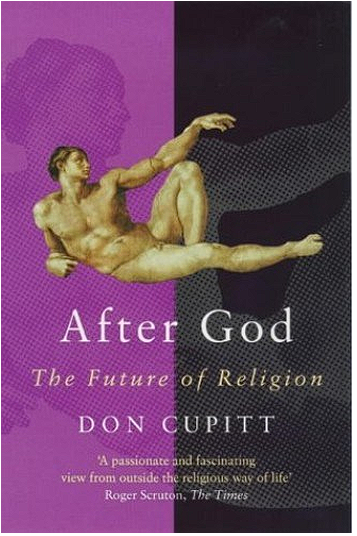
This is from one of his last books written in 2015 and one which, as Hugh Dawes advises us, takes the future very seriously. Despite this extract, it is not only about facing up to one own mortal ity, but the dark cloud hovering over the whole of humanity. Of course, as he reminds us climate change is not a straight forward, scientific prediction, for as soon as it is made it affects our thinking and planning. ‘We can’t go on like this. We need to change ourselves, and the way we act upon our world.’ But, he insists, the change need is not just moral. ‘It means a religious conversion.’
I don’t think Don is optimistic about the future. ‘In us the human being reaches the summit of self-knowledge and solitary dignity, in a moment, which is also to be our utter ruin. . . It is a cosmic tragedy.’
Typically though, this is not quite the last word and only the reader of the Notes and Further Reading will find a slight note of optimism.
‘I have ended with the worst case scenario . . there remains also the other main possibility, that by a continuing process of piecemeal adaptation we will successfully defer catastrophe and survive long enough to attain full sustainability.’ (p112)
And what of our response as we raise a glass? Thanks for all those you teach, inspire and support and may we too pledge to free our own worlds of dogmatic religion, liberate Jesus from the supernatural dress in which the church has clothed him and attempt to practise a solar humanitarian ethic of unconditional love. Maybe in our final days we’ll say In spite of humanity’s wickedness, folly, and undeserved sufferings there has been enough in our world of beauty, goodness, and joy to make it all just about worthwhile. (p112)