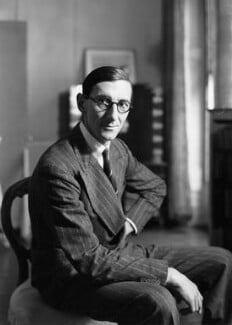
The story of Richard Acland opens a window onto a surprising road to political radicalism. It is an unlikely road, following as it does the path of the 15th baronet, owner of estates in Devon and Somerset, but an advocate of public ownership, who was a Liberal MP in the 1930s, formed the Common Wealth Party in 1942, but in 1945 joined the Labour Party and was a elected a Labour MP in 1947. In 1955 he left the Labour Party in protest at the party’s support for nuclear weapons and was a founder of CND, the Campaign for Nuclear Disarmament.
Acland’s thinking is part of a widespread reflection in Britain during the Second World War to imagine a better society, one determined to avoid the suffering of the economic depression of 1929 that went on to blight most of the following decade. Leading figures in this process were William Beveridge, the architect of the welfare state, R.H. Tawney and Sidney and Beatrice Webb. Also promoting reflection on the post-war future was Archbishop William Temple, who as archbishop of York in 1941 organised what became known as the Malvern Conference to discuss ‘The Life of the Church and the Order of Society’.
Among the speakers were T.S. Eliot, Dorothy Sayers and the theologian Donald Mackinnon. Acland attended the conference, and it is clear that it was this Christian perspective that led him into politics: he mentions it a number of times in his 1942 book What it will be like in the New Britain. In the introduction to this book, he quotes, in order to attack, the idea that, provided people are good, the structures of society are irrelevant.
This is not true. For some of the features of our present society, ‘while they can never prevent individual men and women from becoming Christians, are contrary to divine justice, and act as stumbling-blocks preventing men from living Christian lives’.
Initial members for Common Wealth came from the short-lived 1941 Committee, formed initially to discuss ways of increasing production in wartime, which went on to discuss the shape of postwar British society. This was an extremely diverse group, chaired by J.B. Priestley and including, in addition to Acland, David Astor, Thomas Balogh, Richard Titmuss, Victor Gollancz, Julian Huxley, and H.G. Wells.
Several members would go on to have important roles in the Labour Party, such as Tom Driberg, Michael Foot and Douglas Jay, and there was even a future Conservative Chancellor of the Exchequer, Peter Sir Richard Dyke Acland, 15th Baronet Sofia 154 December 2024 8 Thorneycroft. The Committee’s ‘Nine-Point Plan’ called for works councils and the publication of post-war plans for the provision of full and free education, employment and a civilised standard of living for everyone.
Richard Acland initially followed the family tradition and stood as a Liberal candidate for Parliament. After two unsuccessful attempts he was elected as MP for Barnstaple in 1935. When Common Wealth became a political party, it ignored the wartime electoral truce between the main parties and stood candidates in the 1942 election, electing four MPs, including Acland. In the 1945 Labour landslide it was left with a single MP. Acland and many others left the party and joined Labour. He was elected as Labour MP for Gravesend in 1947 and held the seat until he resigned from Labour in 1955 and stood as an independent and lost. After this he abandoned electoral politics and became a teacher and lecturer in a college of education.
Acland’s commitment to nuclear disarmament was shared by other prominent Christians, the Roman Catholic Bruce Kent, the Anglican Paul Oestreicher and the Methodist Donald Soper. Within the Labour Party his emphasis on participation and workers’ control, sometimes called guild socialism, was a minority current compared with the utilitarian outlook of Fabianism. Its lack of influence may have contributed to the later unpopularity of nationalisation, seen as creating clumsy, unaccountable bureaucracies. As Jon Cruddas comments in his book A Century of Labour, ‘There was no attempt to embrace industrial democracy despite the history of guild socialism and the consultative machinery of wartime, with the unions appearing content to adhere to the longstanding principles of voluntarism and collective laissez-faire.’
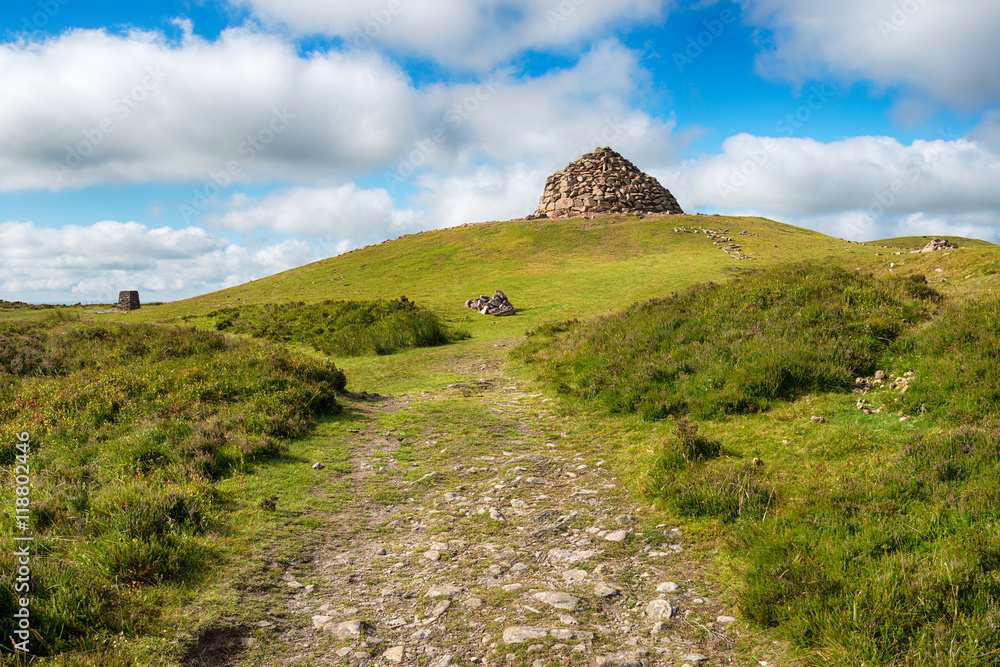
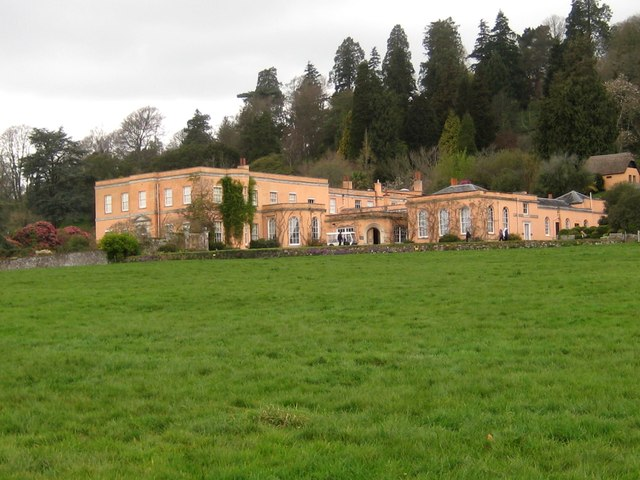
Richard Acland is remembered for a more personal decision. In 1944, feeling uneasy about land in private hands, he made over his two estates, Killerton in Devon and Holnicote on Exmoor in Somerset, to the National Trust. The sale angered his wife, Anne, and his sons and nearly led to the end of their marriage. At the time it was the largest transfer of land the National Trust had ever received.